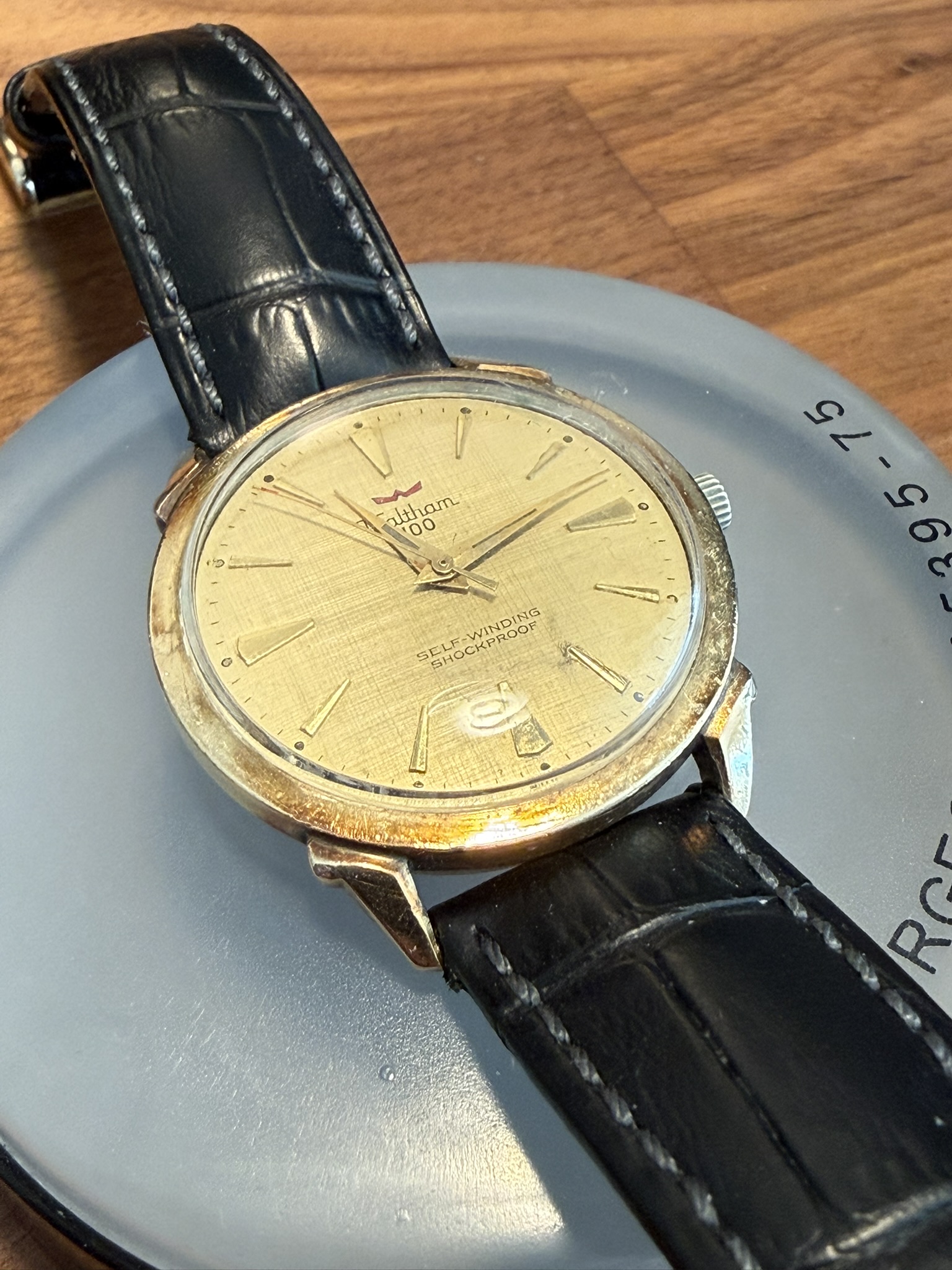
Waltham 100 auto
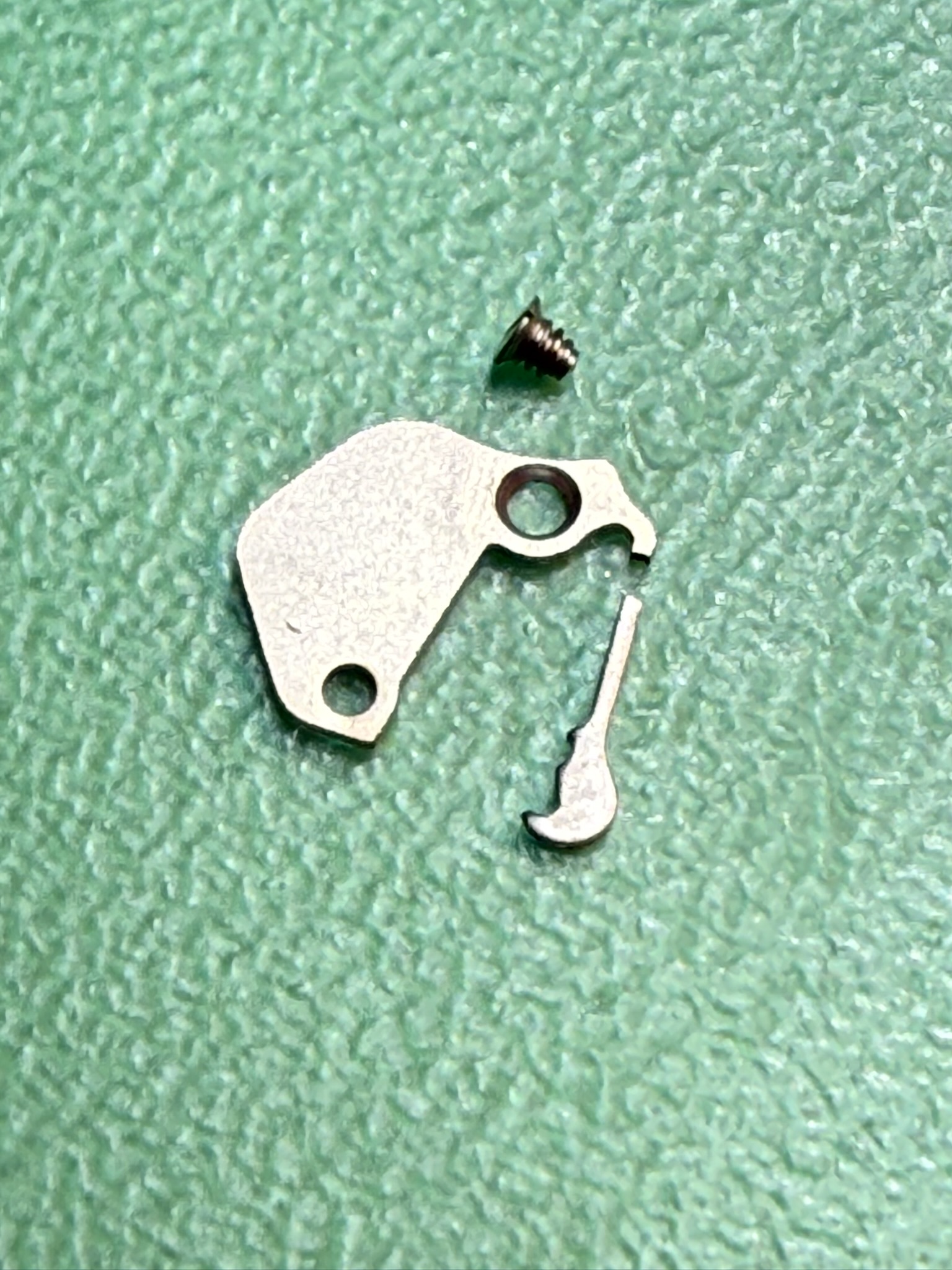
I'm taking a look at this one for a friend. He reported that the crown
tends to slip back in when setting the hands. I'm suspecting a broken
setting lever spring, but we'll see. In addition, there's a chip in the
crystal. I can hear the rotor fouling on something. This watch was
serviced by a friend of the family many years ago.
Although presented as a Waltham movement, this is in fact an ébauche on
the AS 1700/1701 movement. Here is the
AS1700 service manual. (source)
The lift angle of the AS1700 is 52°. Here are the timegrapher results
after winding halfway (winding became difficult).
| Position | Rate [spd] | Amplitude [°] | Beat error [ms] | Note |
|---|---|---|---|---|
| DU | +1 to -8 | 307 to 250 | 1.4 | |
| DD | +6 to +12 | 280 to 310 | 1.6 | |
| CL | -8 to +4 | 260 | 2.0 | |
| CD | -19 to -15 | 250 | 2.0 |
Disassembly and inspection
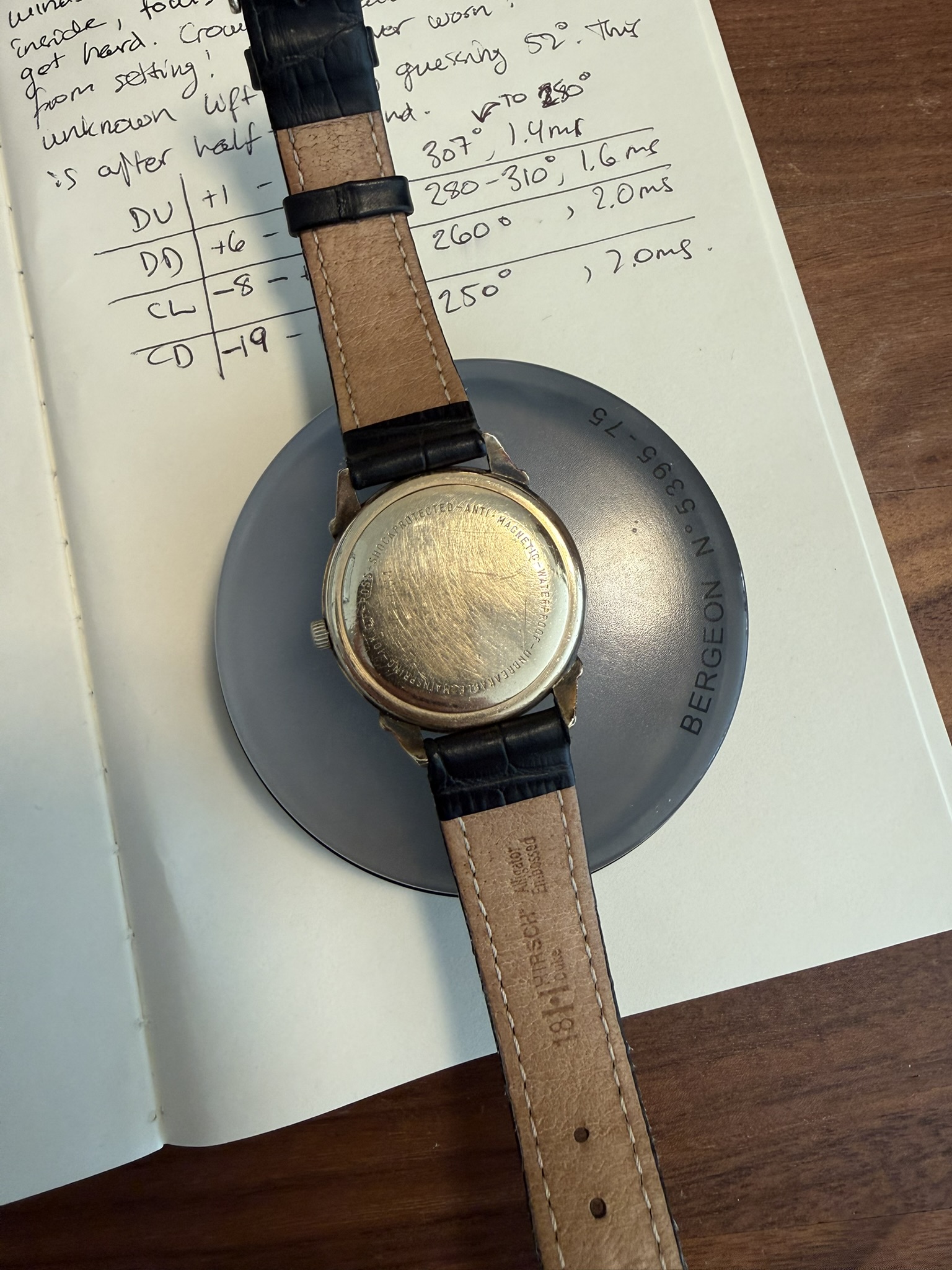
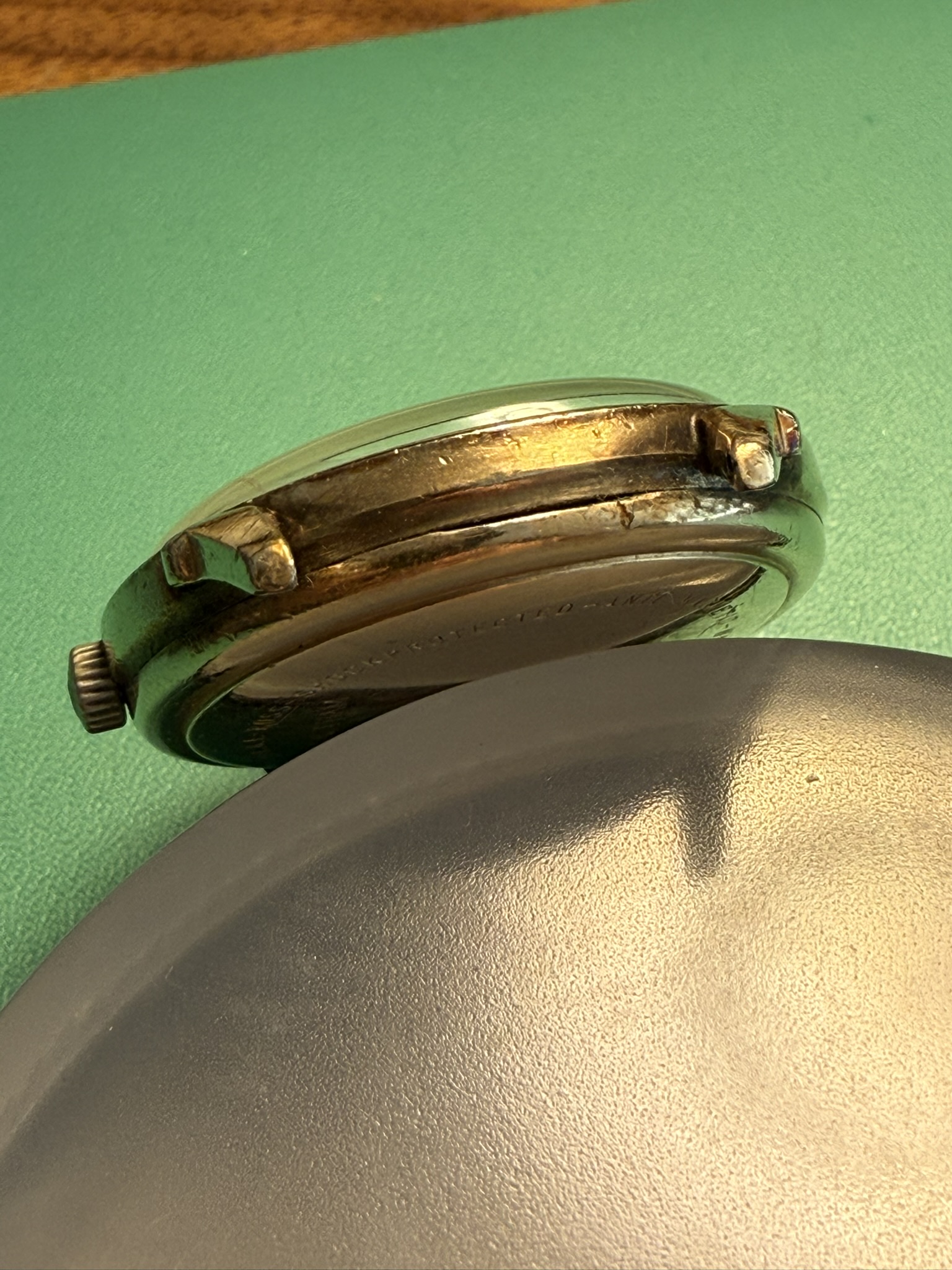
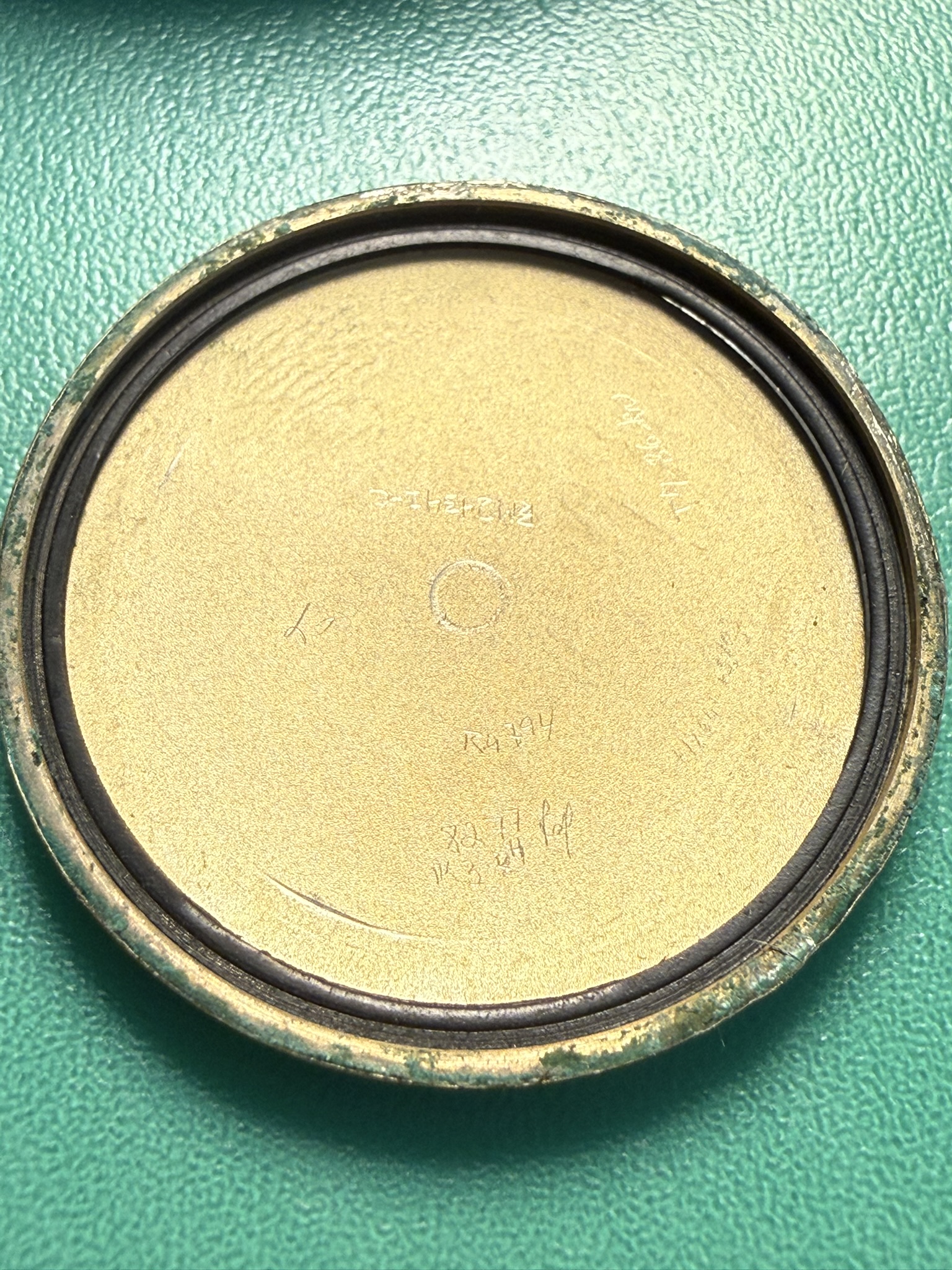
First hurdle: the caseback is snap-on, and the previous watchmaker snapped the lid back on such that the knife slot fell between the lugs. There's no way to get a case knife into it without marring the lugs. I grabbed a square scalpel blade and gently worked it into the caseback seam with a rubber mallet until the caseback let go.
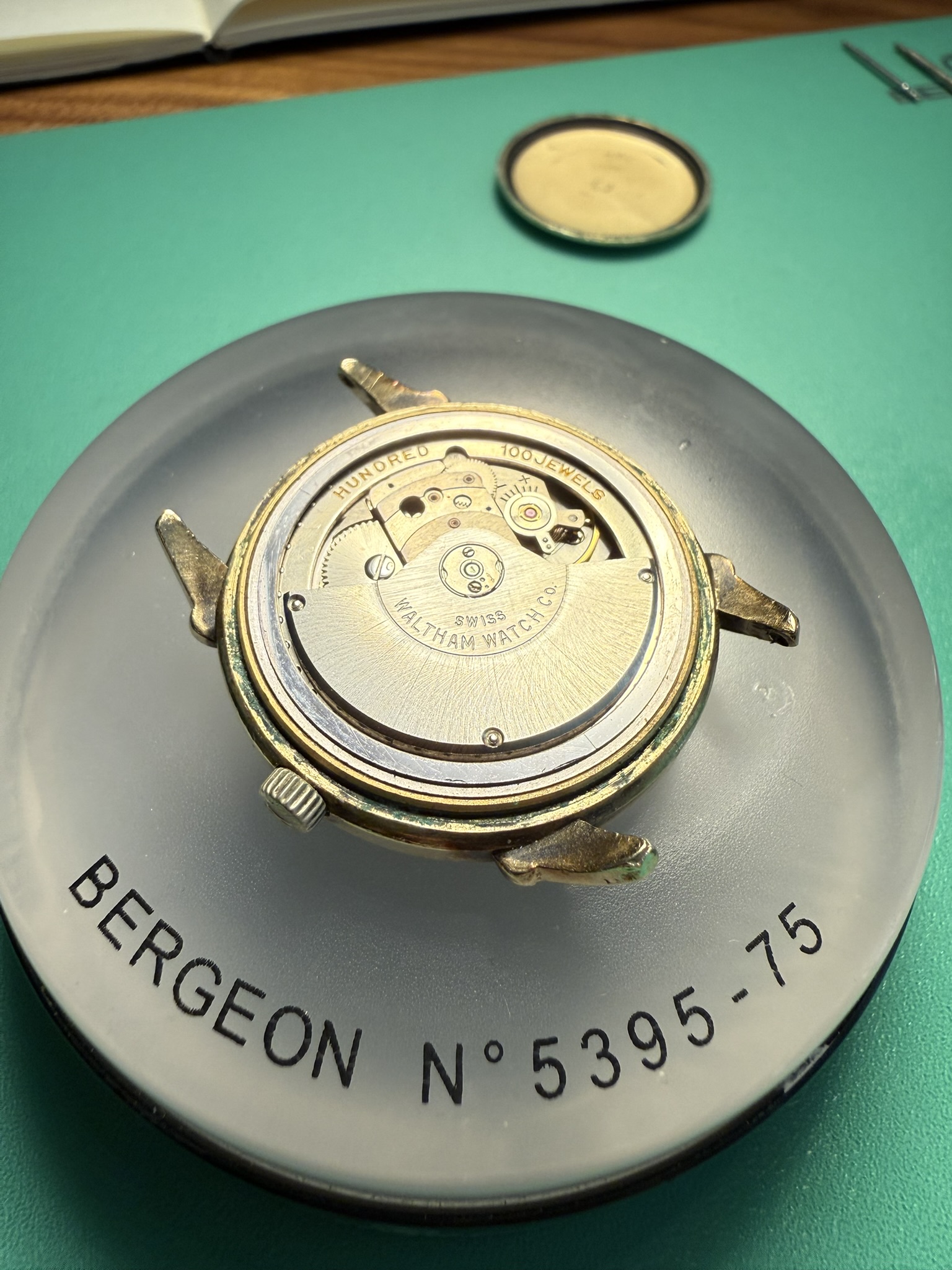
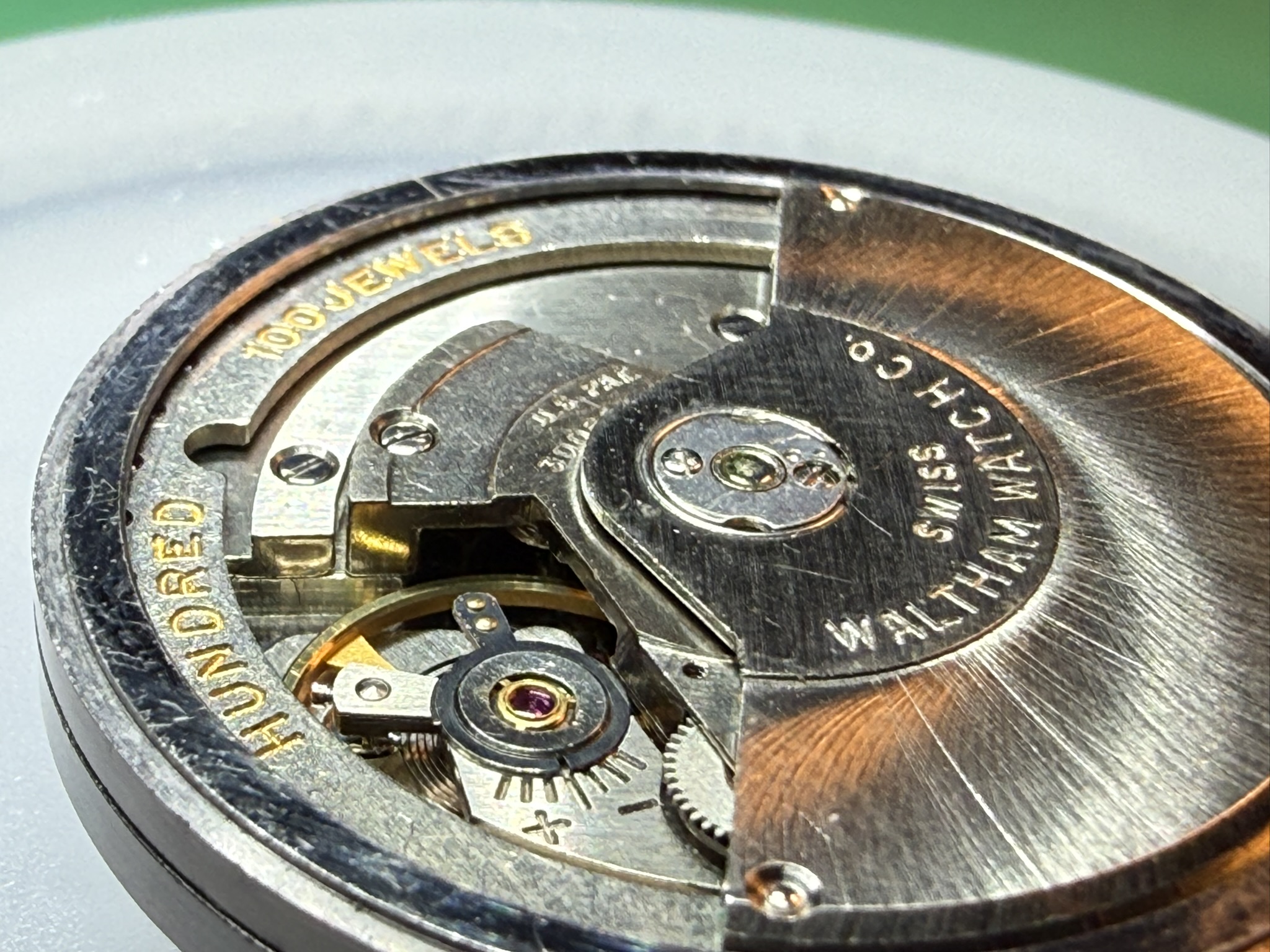
Wow, the rotor reads "100JEWELS". Prior to 1950-ish, movement
manufacturers apparently stuffed movements full of jewels to inflate the
jewel count. Most of the "extra" jewels in this movement are on the
automatic rotor to reduce friction as it rotates.
Anyway, the 2nd hurdle was freeing the now loose rotor from the movement
ring. I wasn't sure whether the movement ring was split in two or if the
assembly comes apart another way. After a lot of thinking and prying, I
eventually dislodged the "upper half" of the movement ring to free the
rotor.
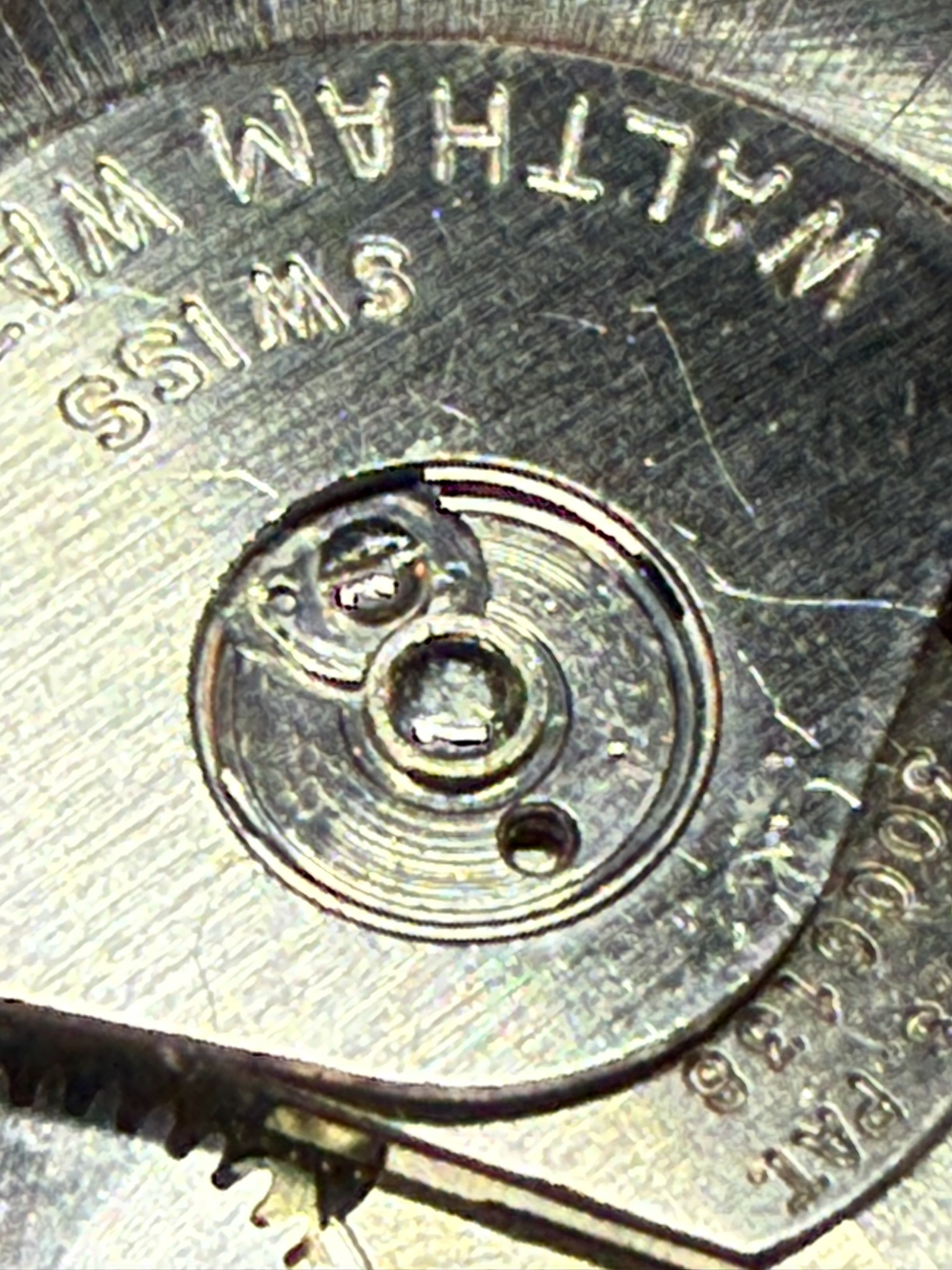
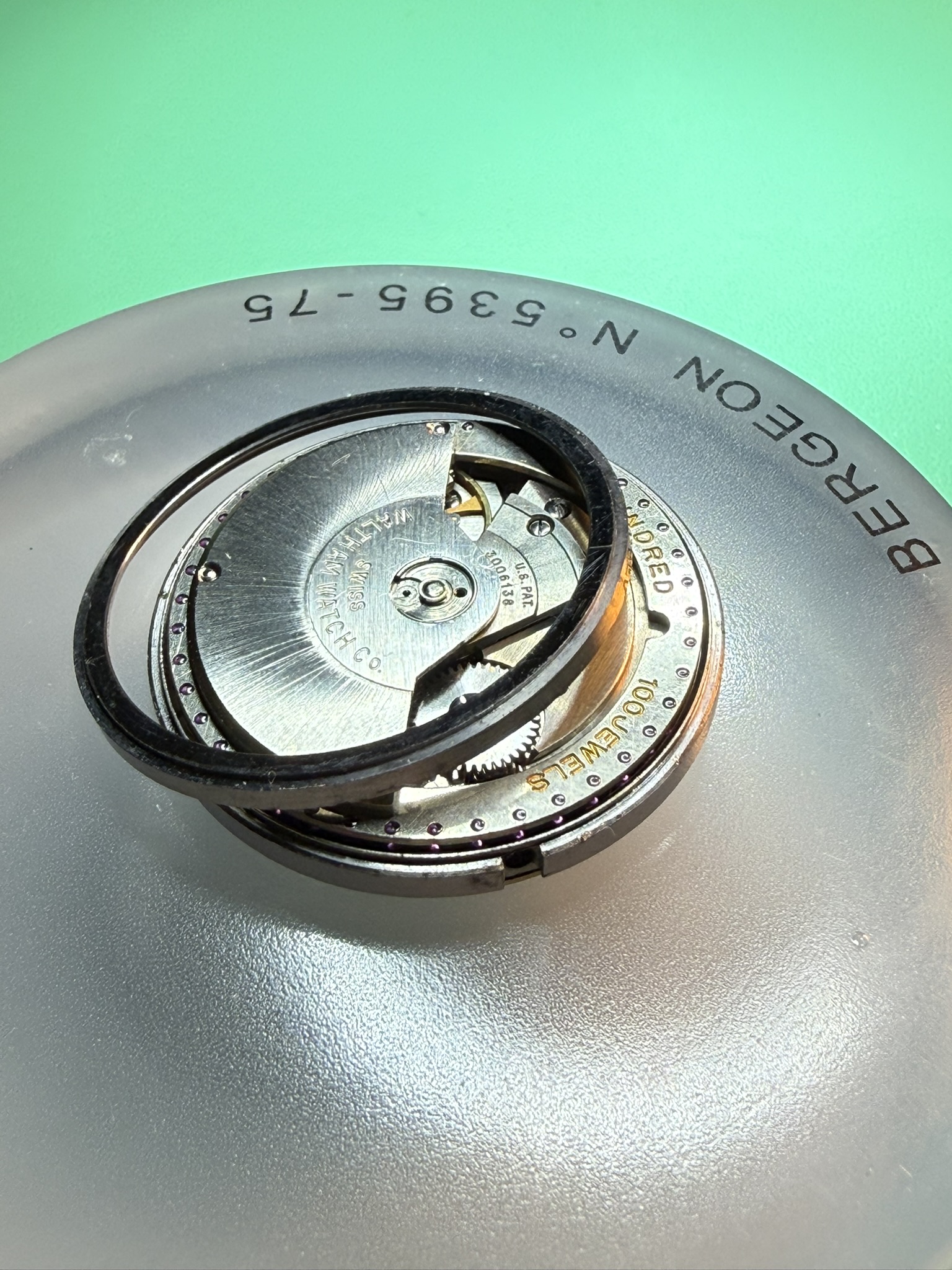
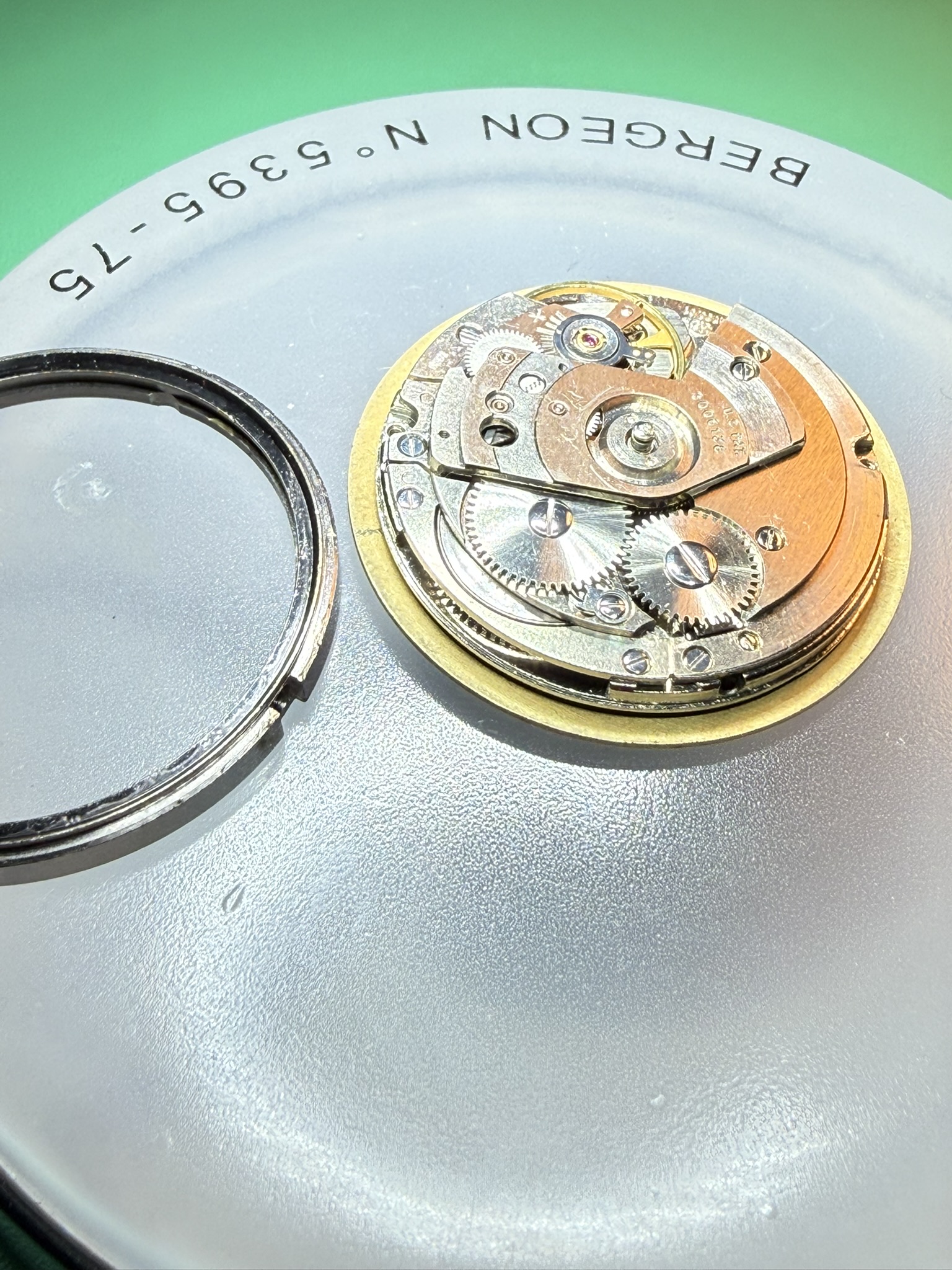
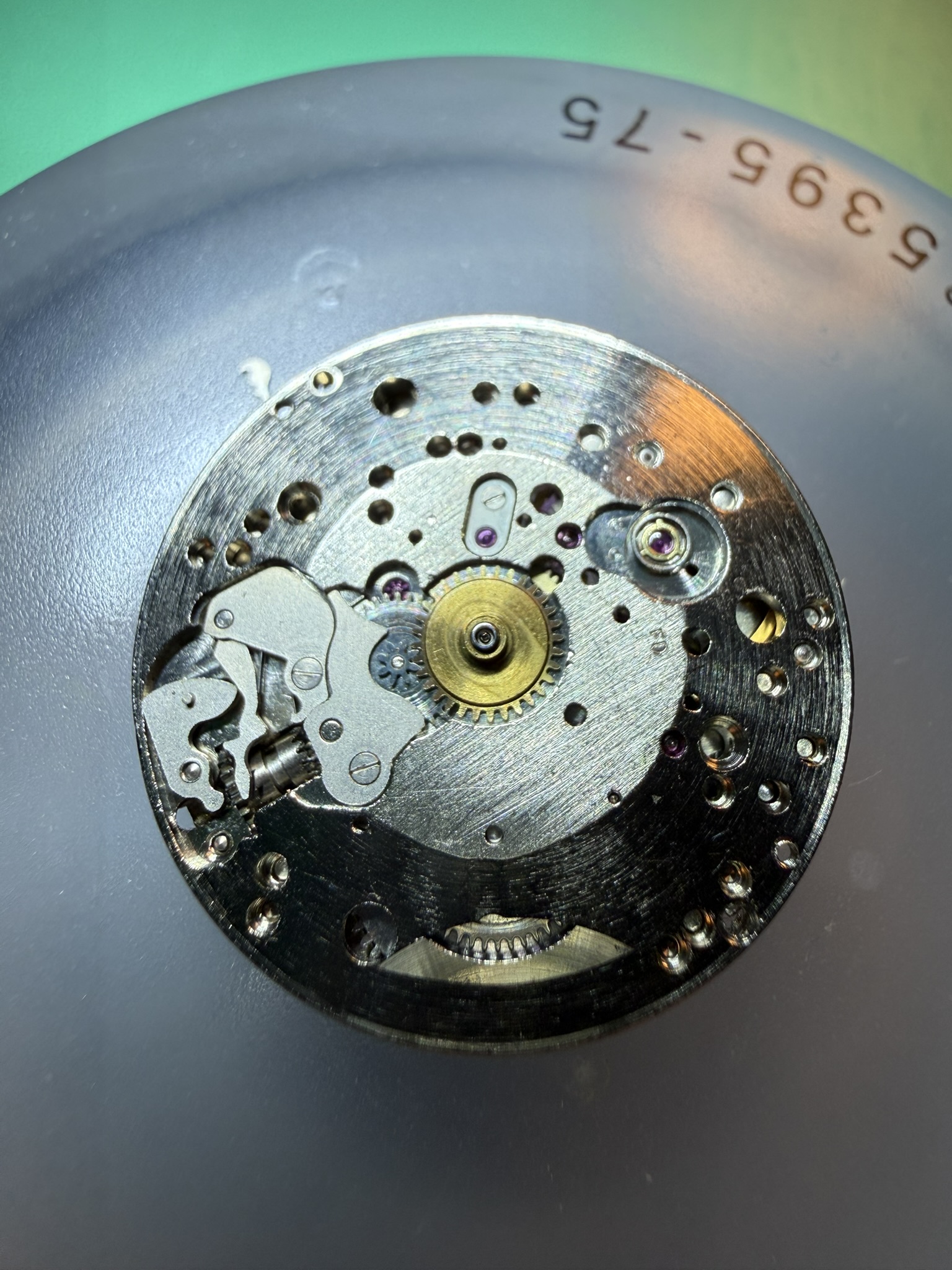
Once the dial was off, the setting lever spring fell out. NOS replacement ordered off eBay. The rest of the disassembly was uneventful. Most of the jewels are bone dry. There are pools of still-wet oil under the bridges. Our previous watchmaker obviously oiled the pallet fork pivots as well: lack of experience, or is this an attempt to prevent knocking?
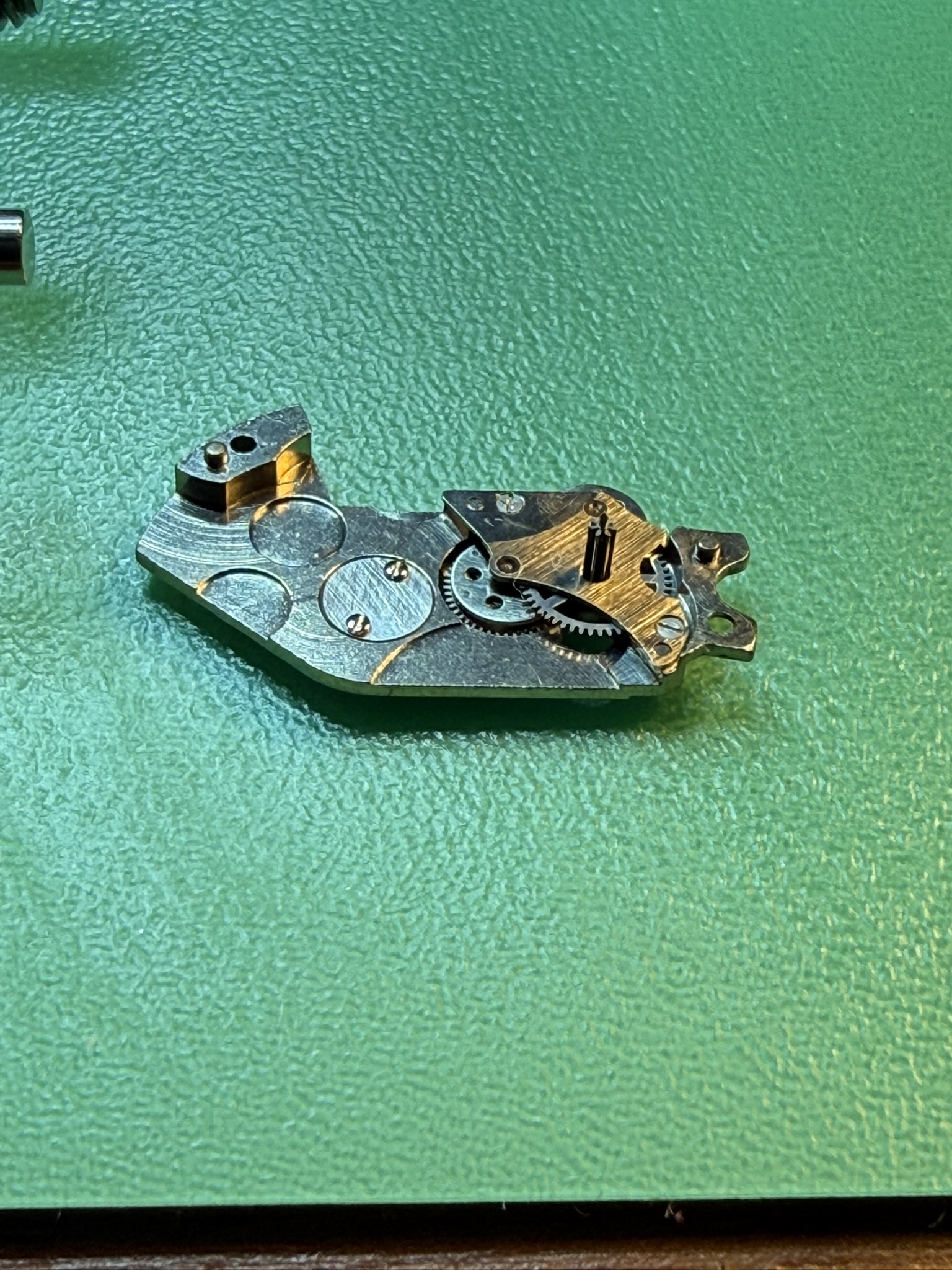
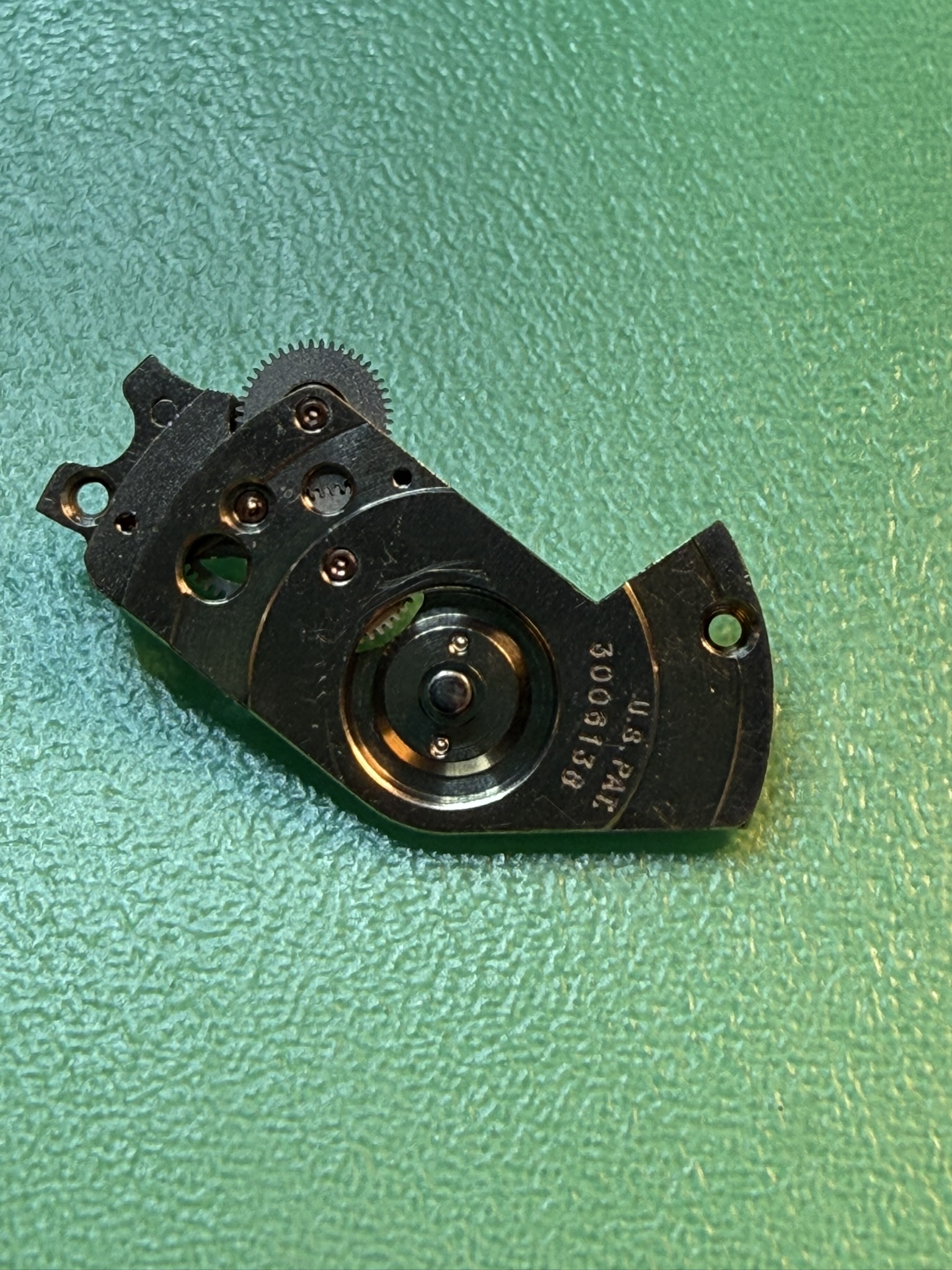
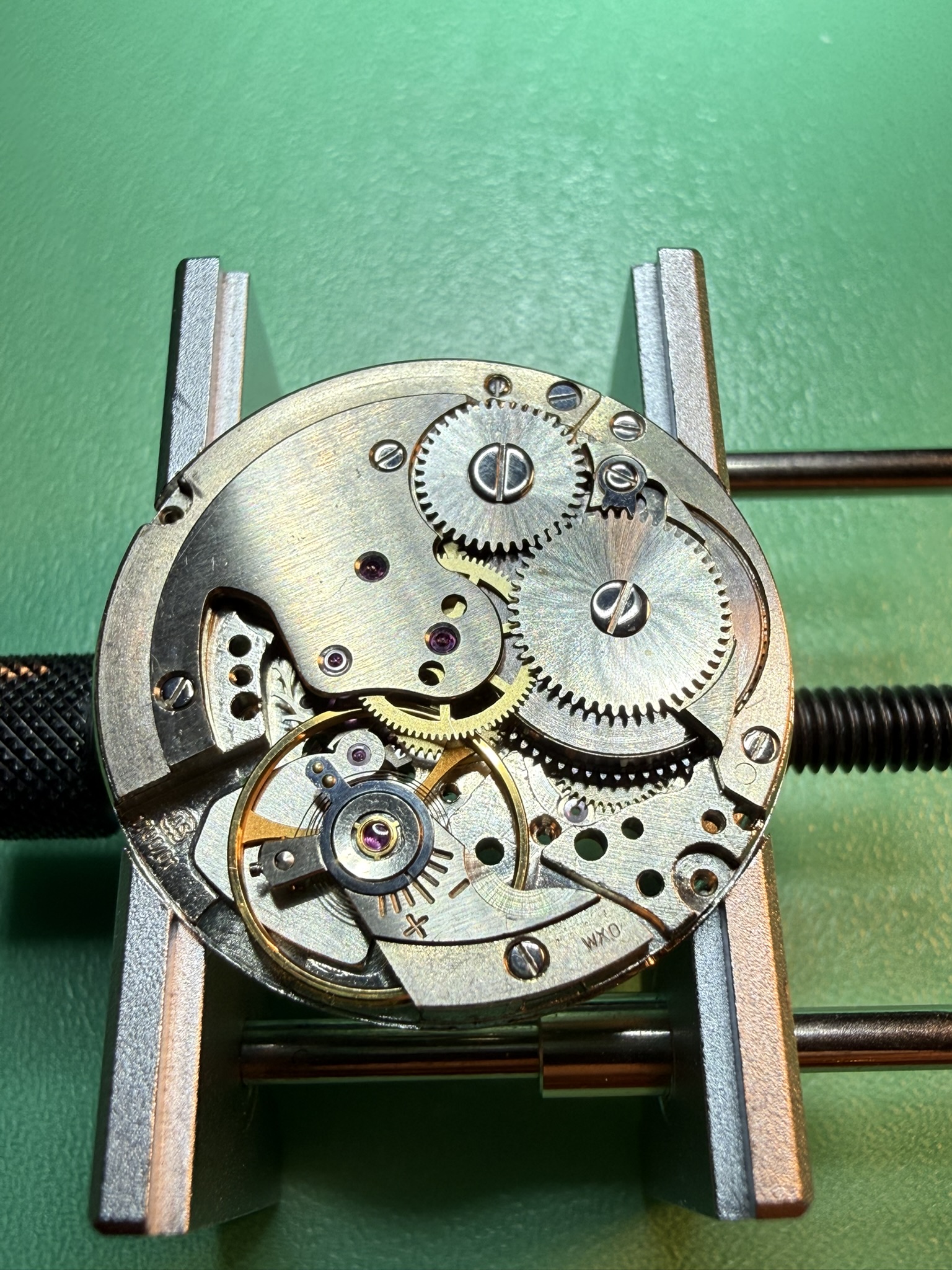
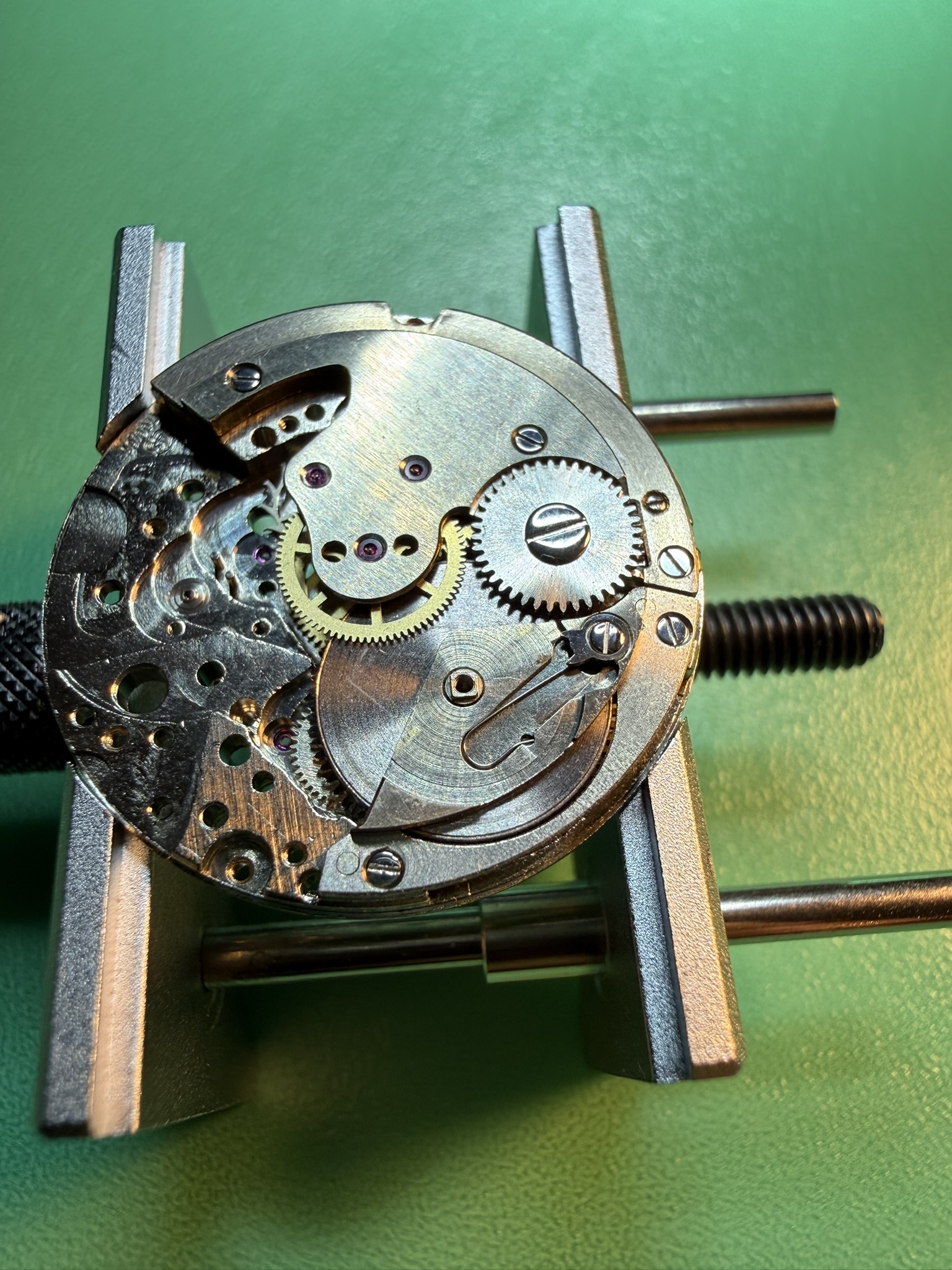
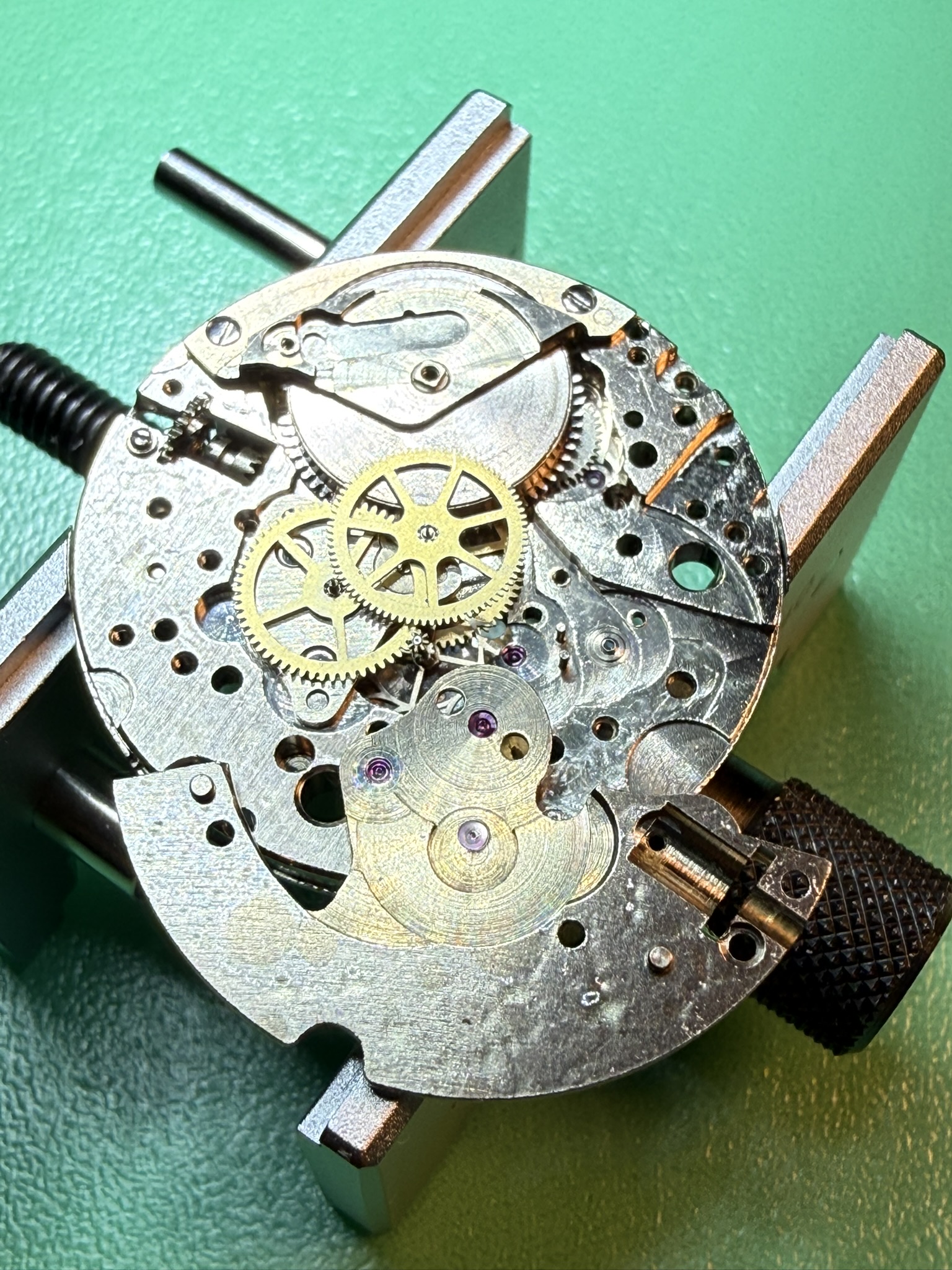
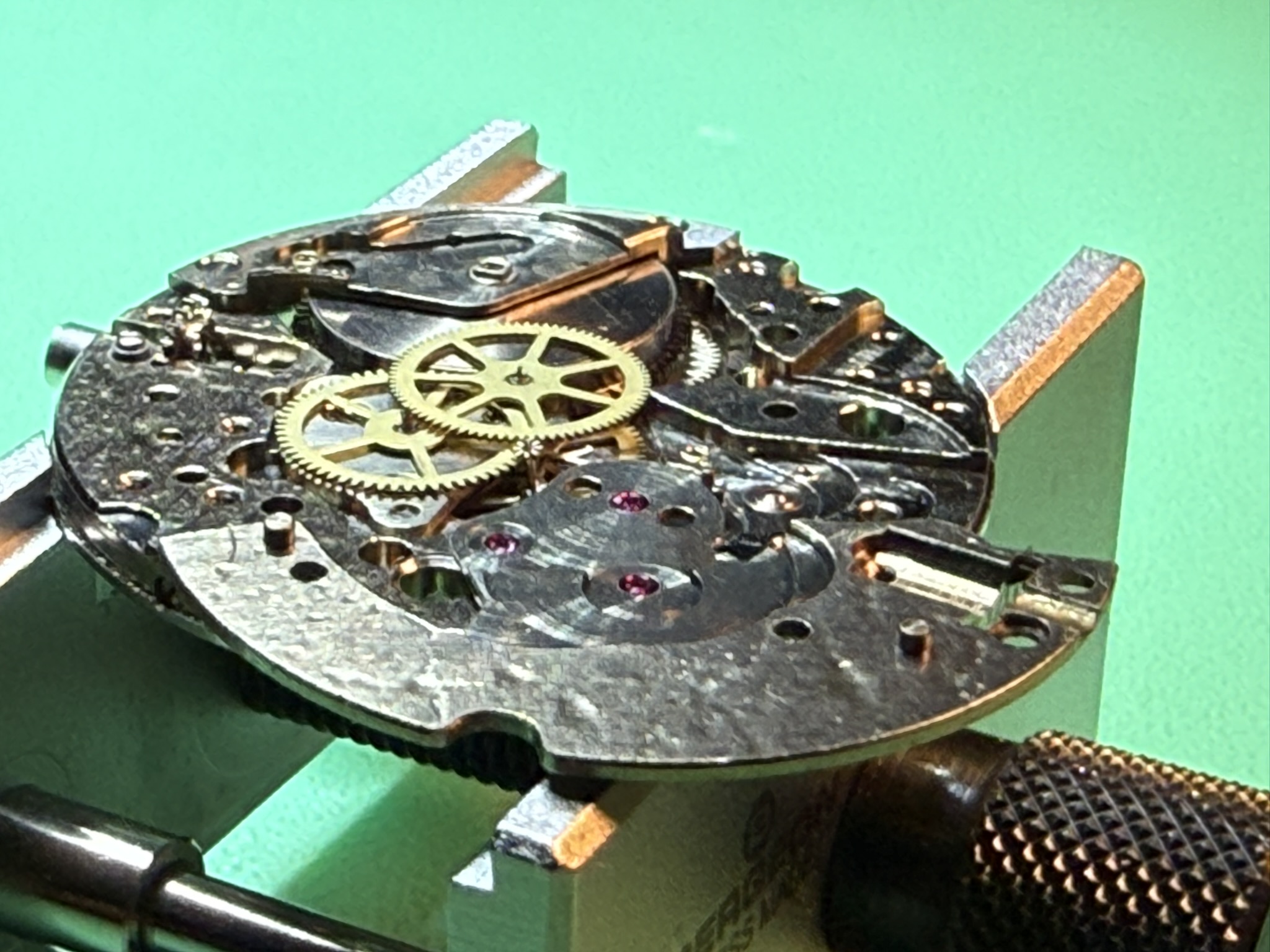
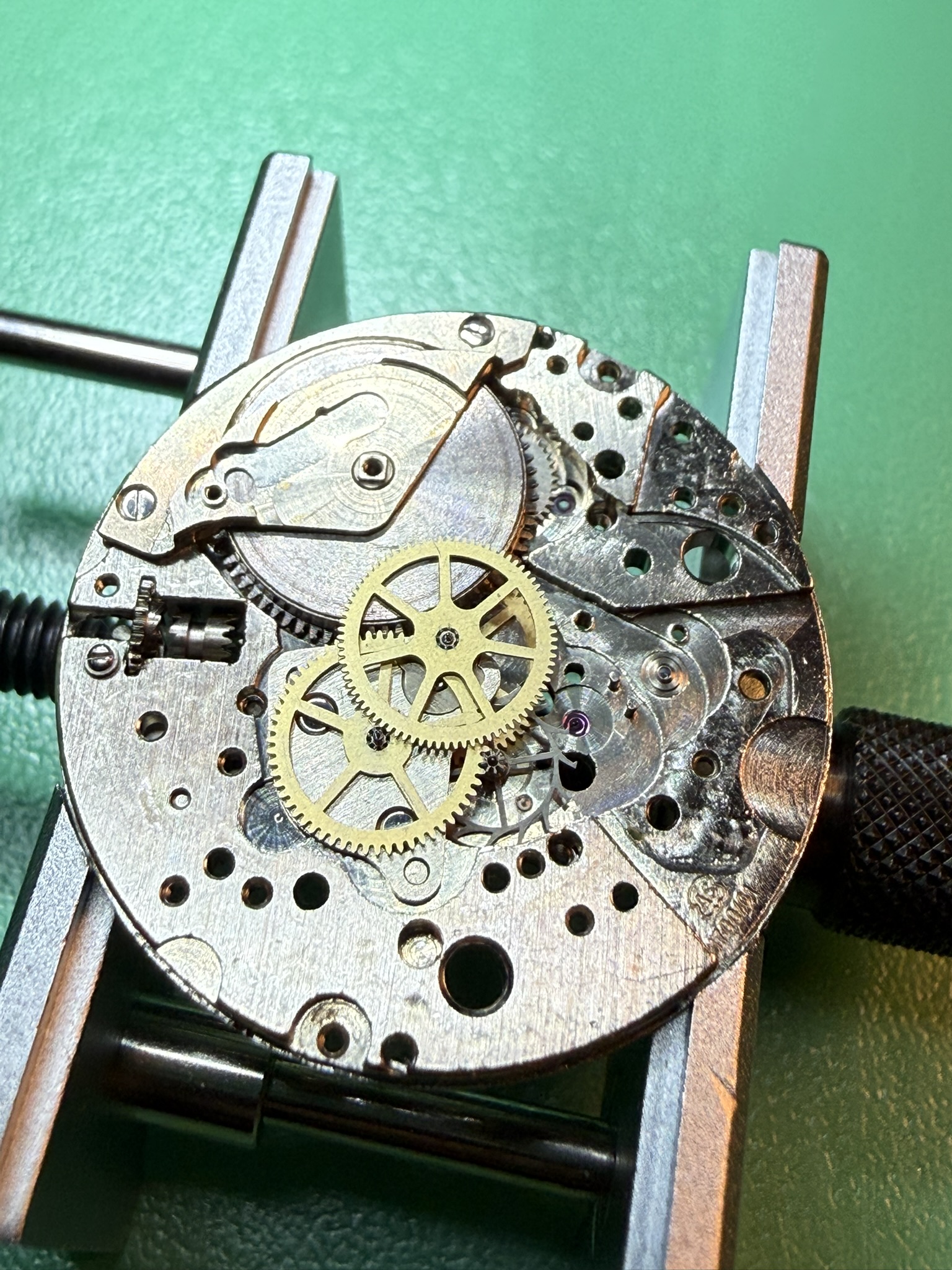
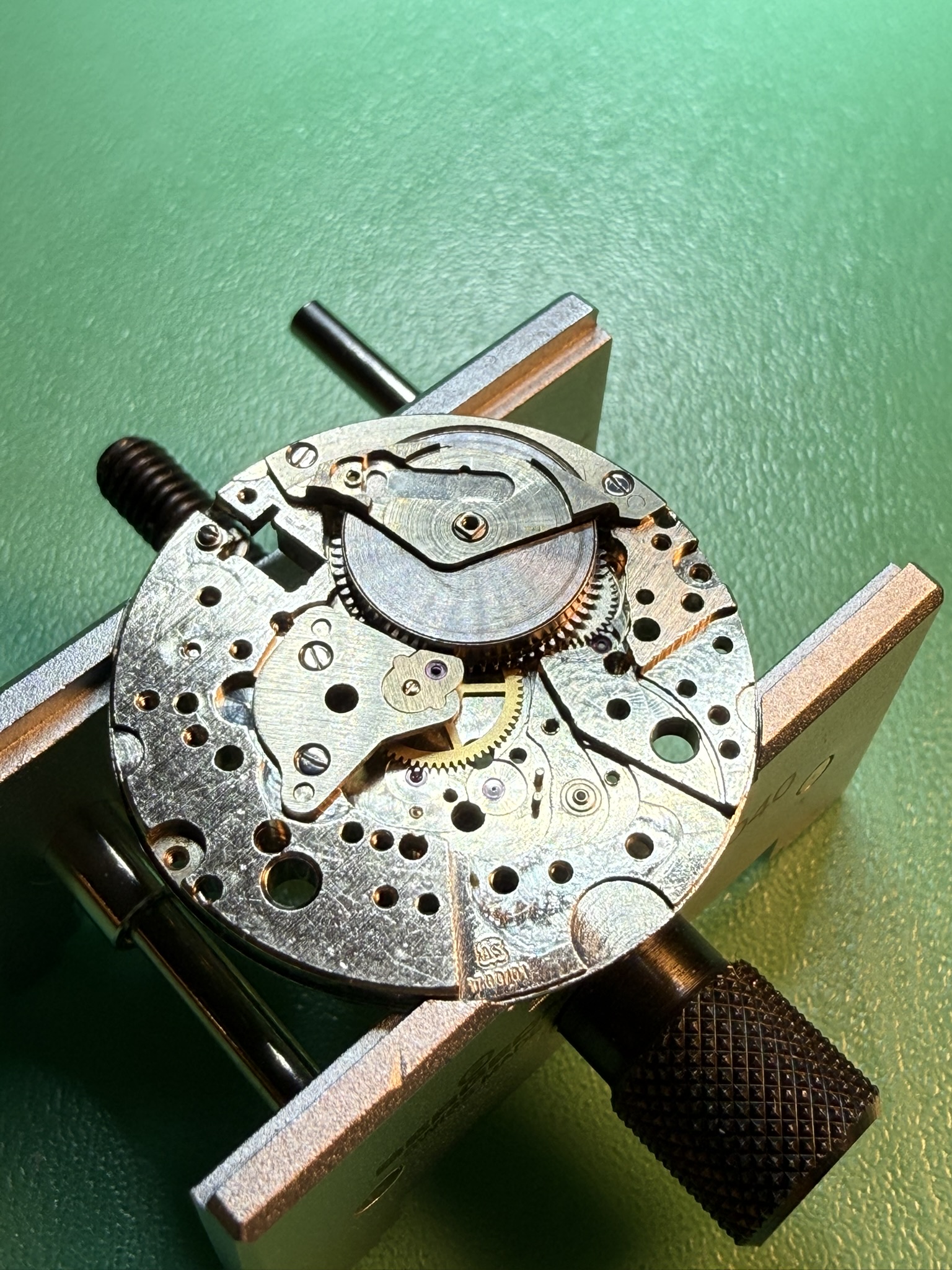
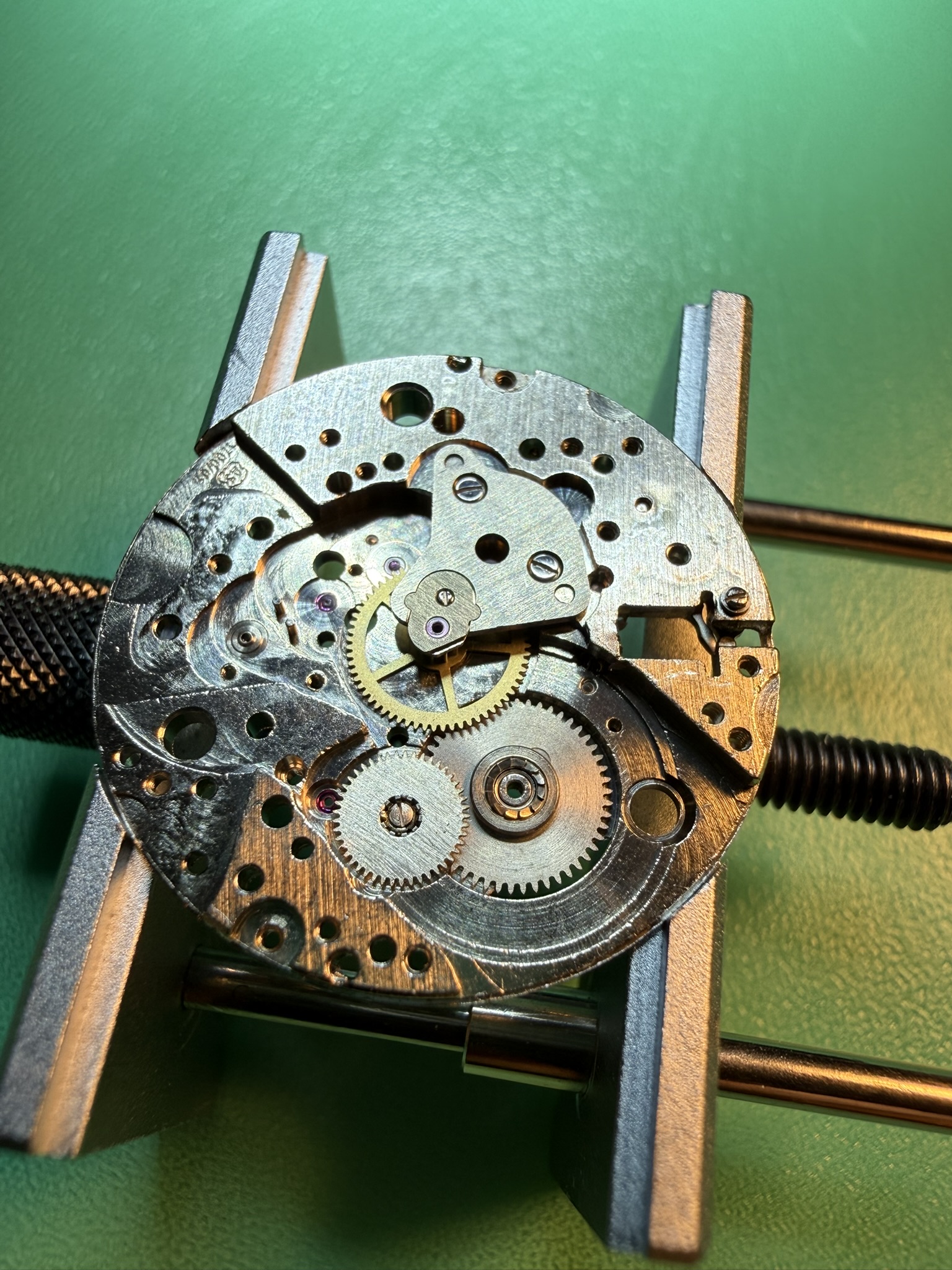
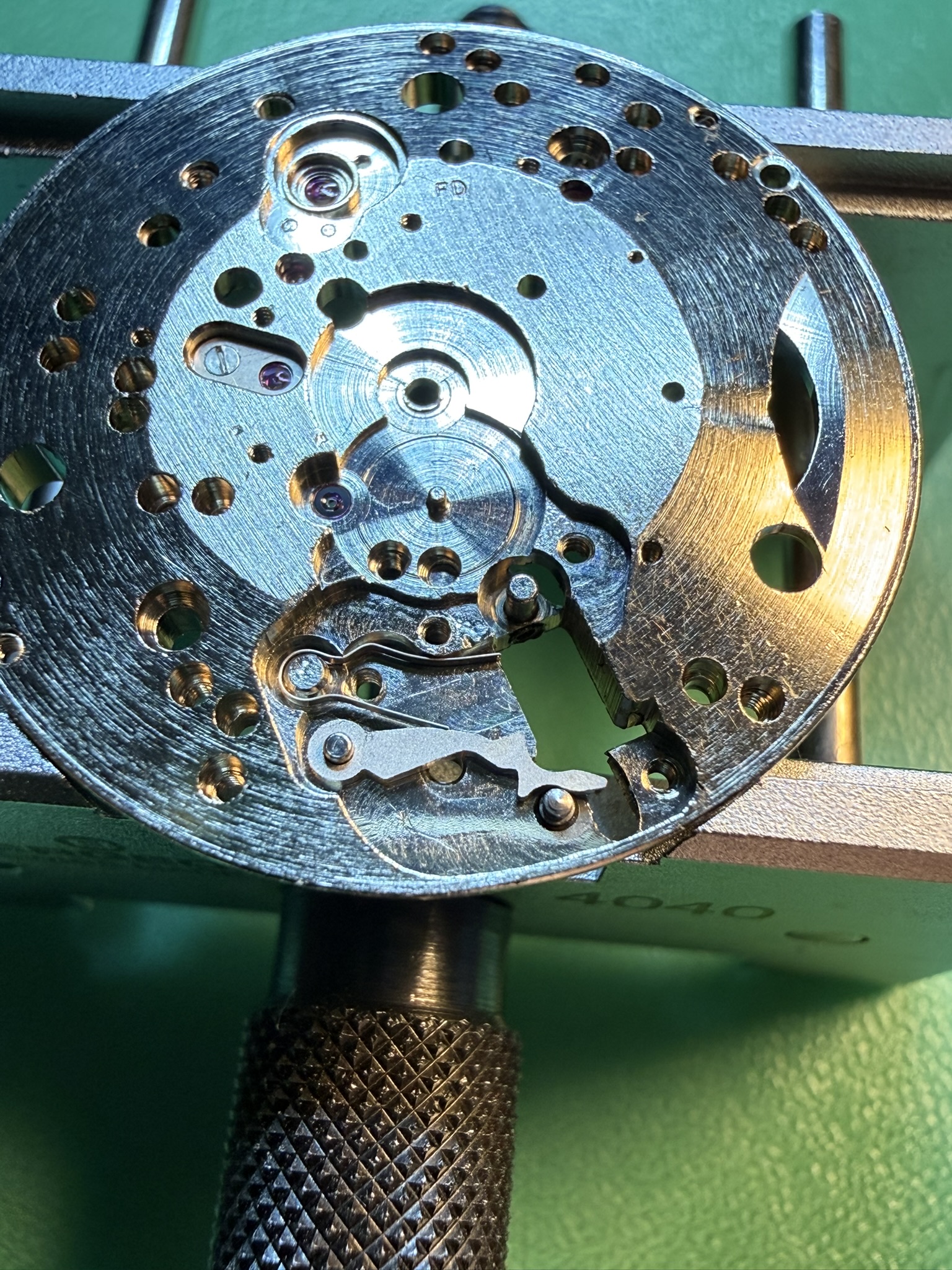
Component overview
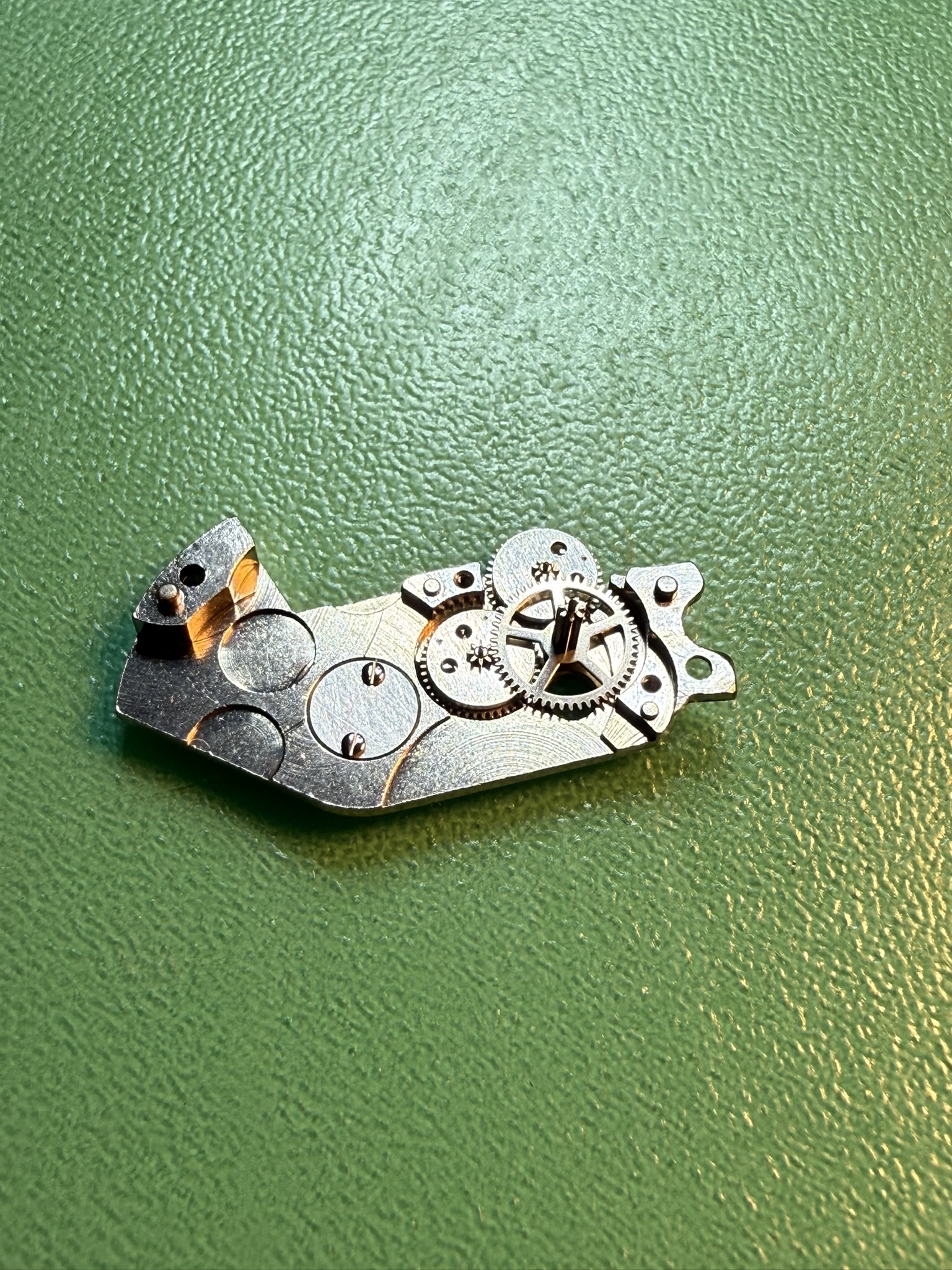
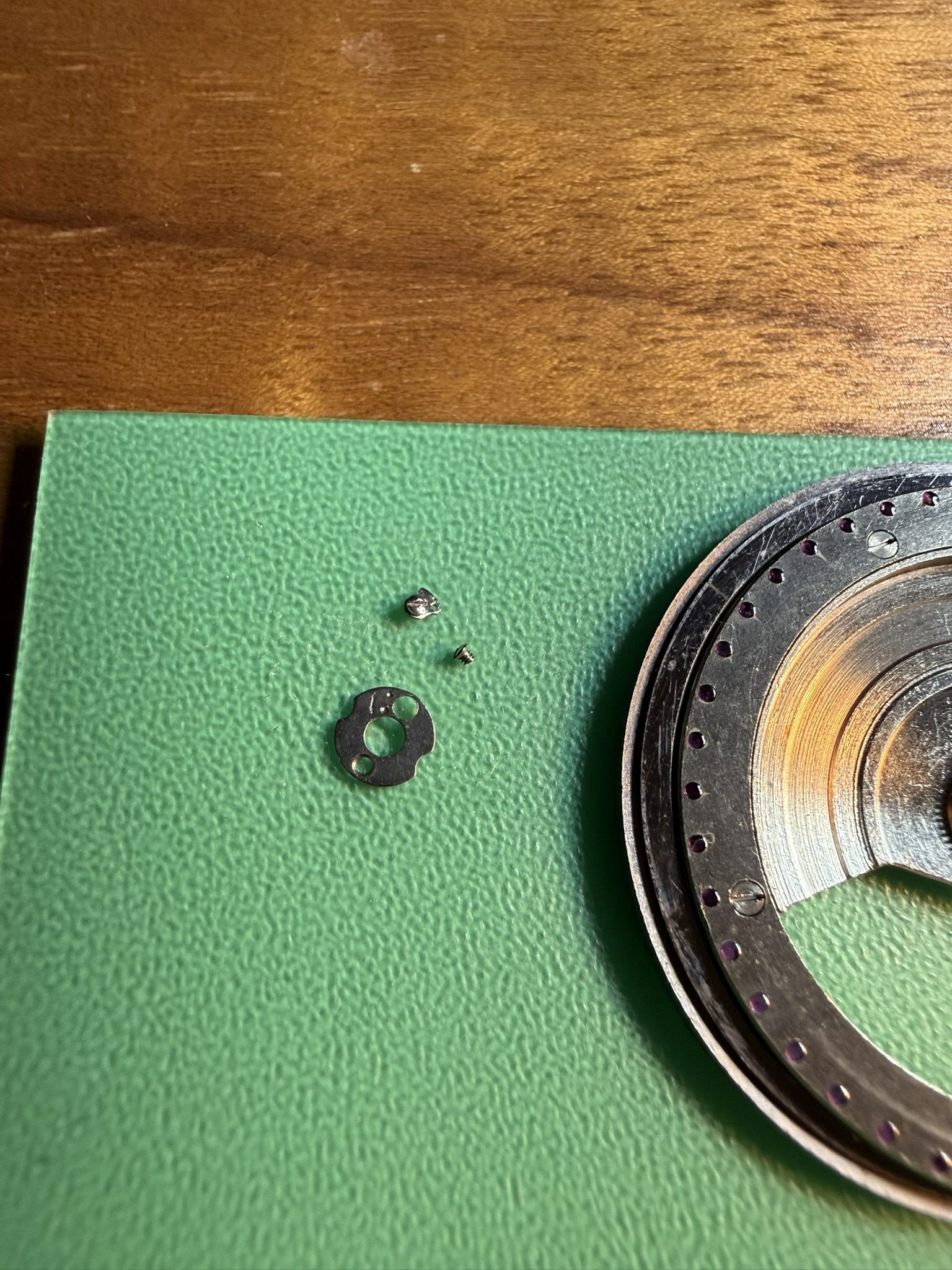
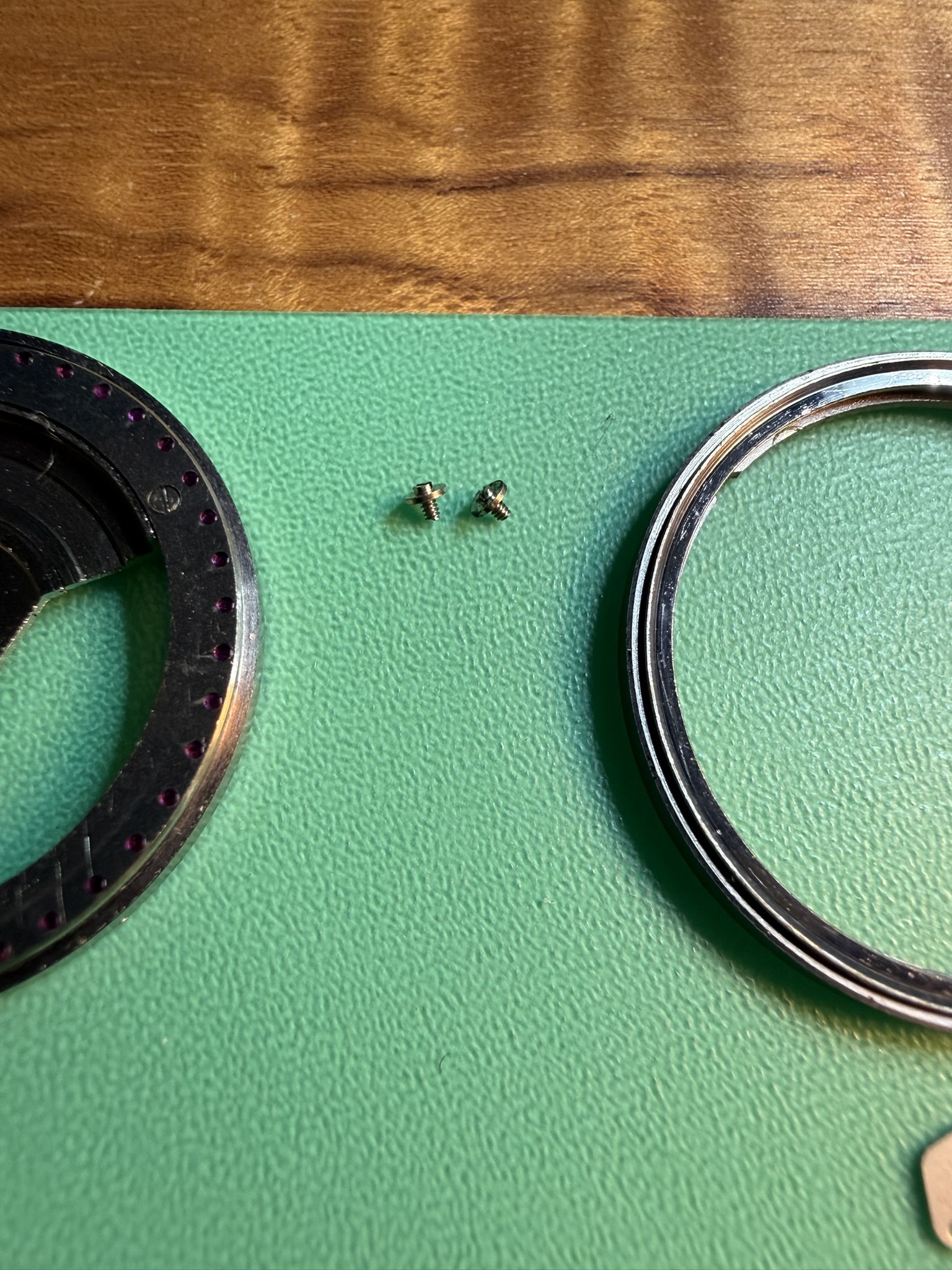
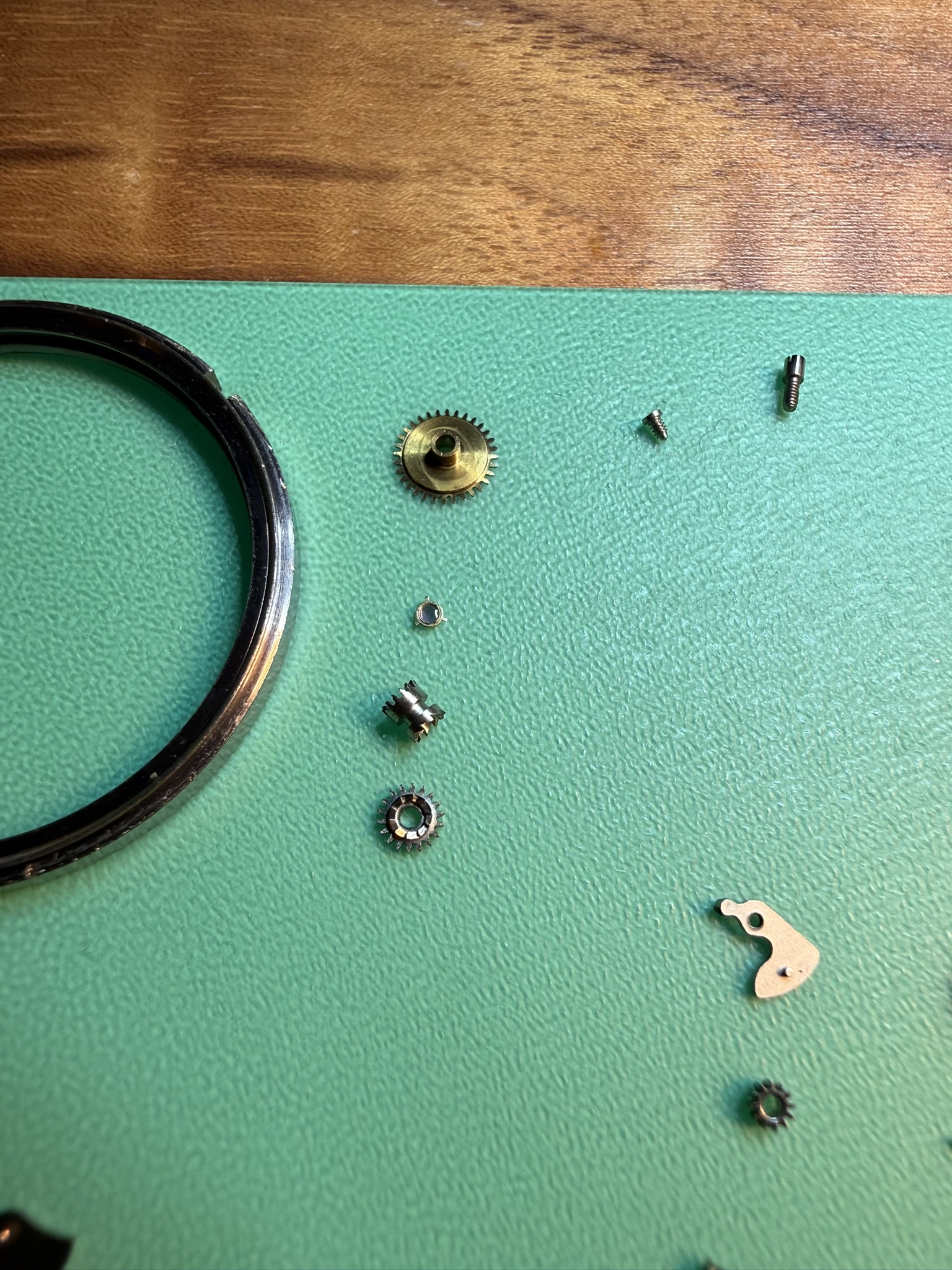
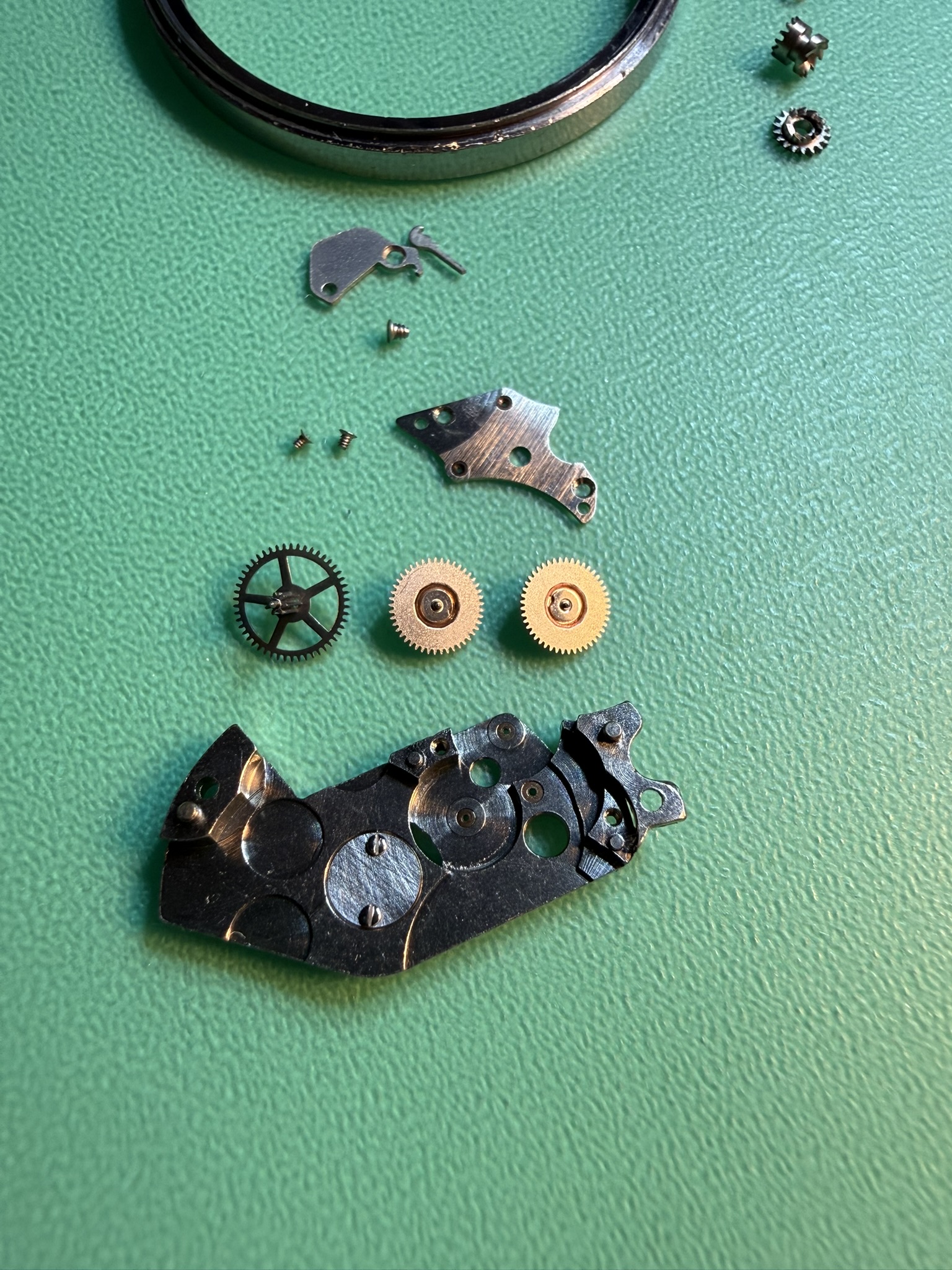
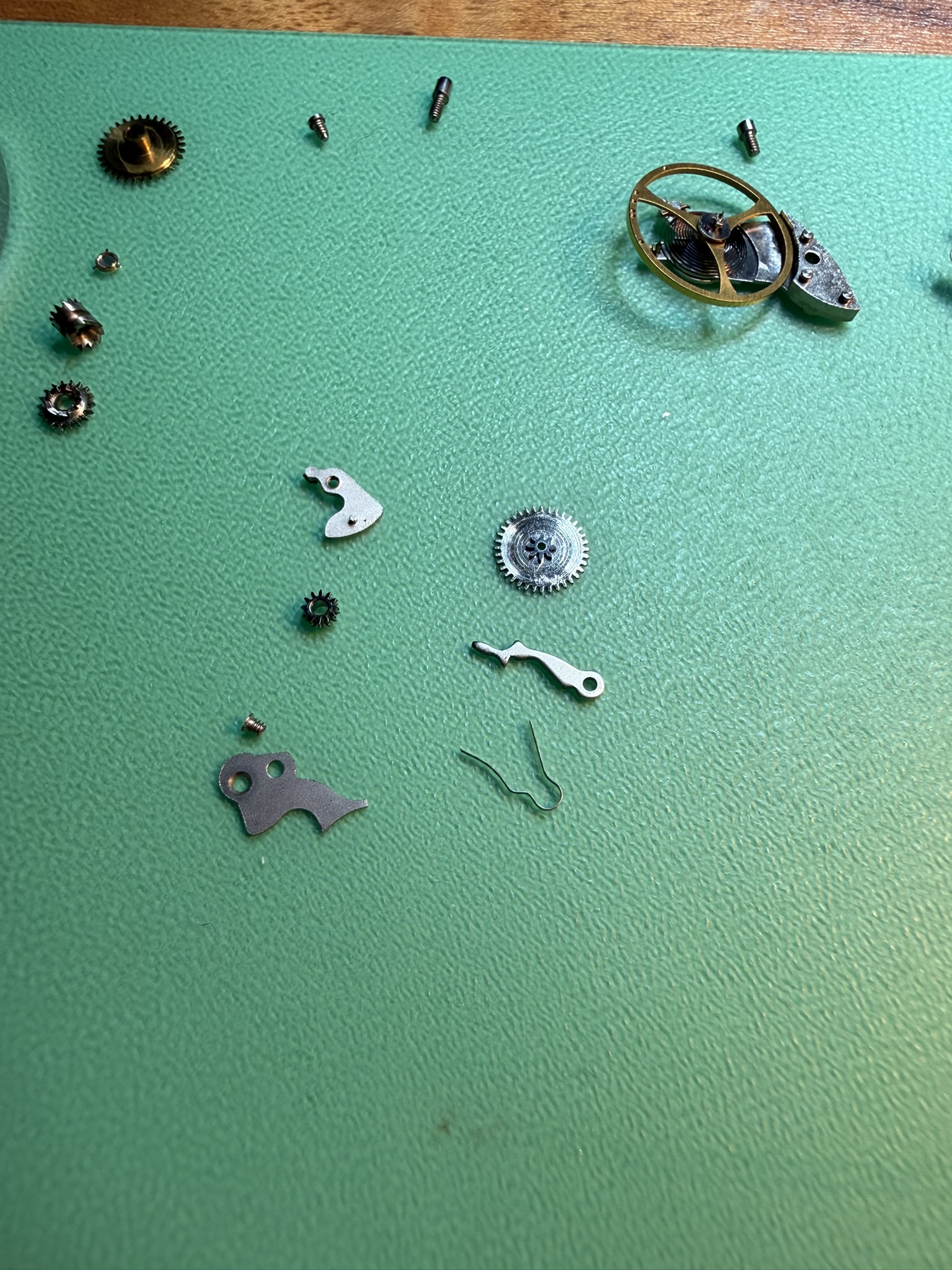
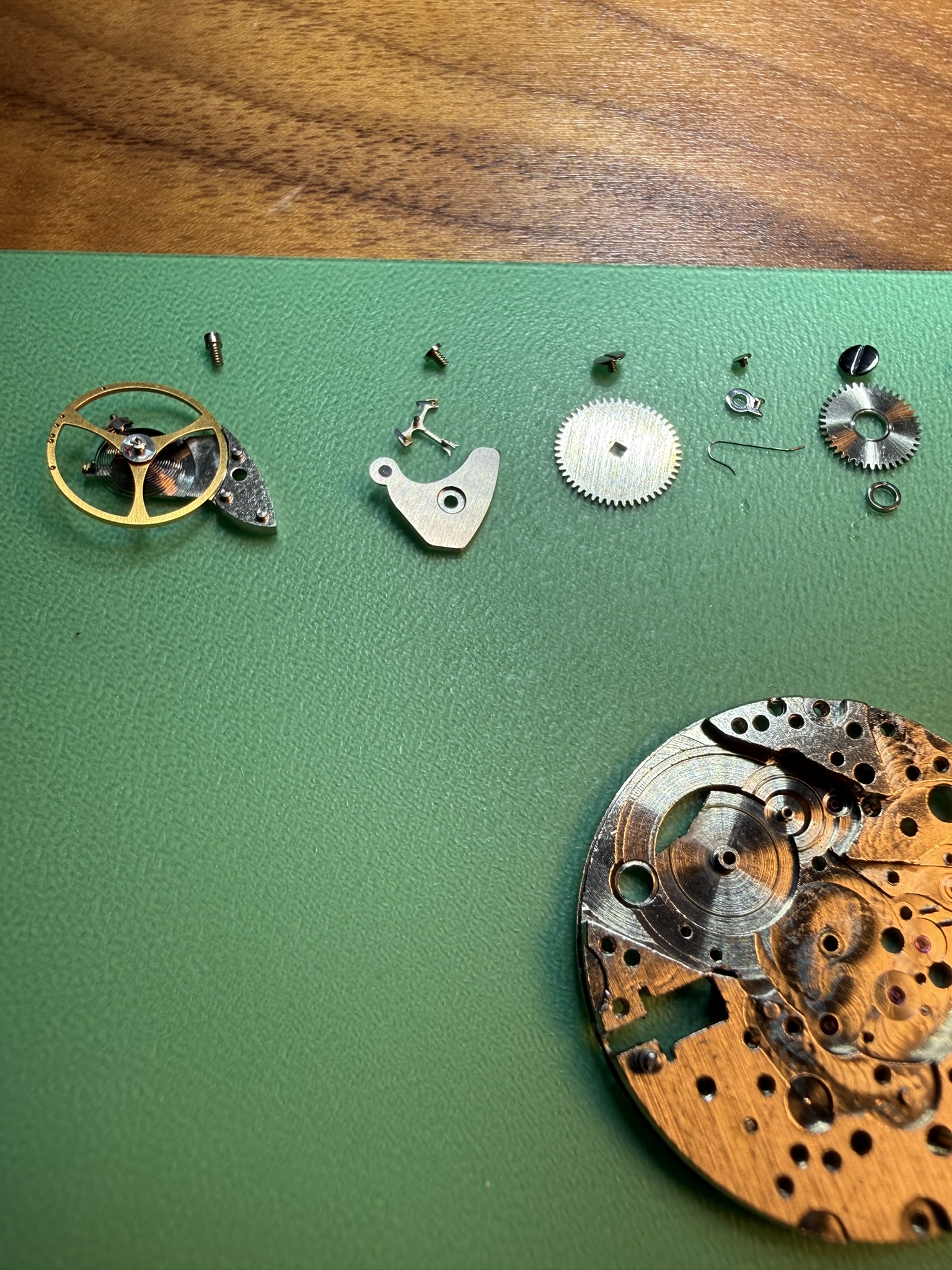
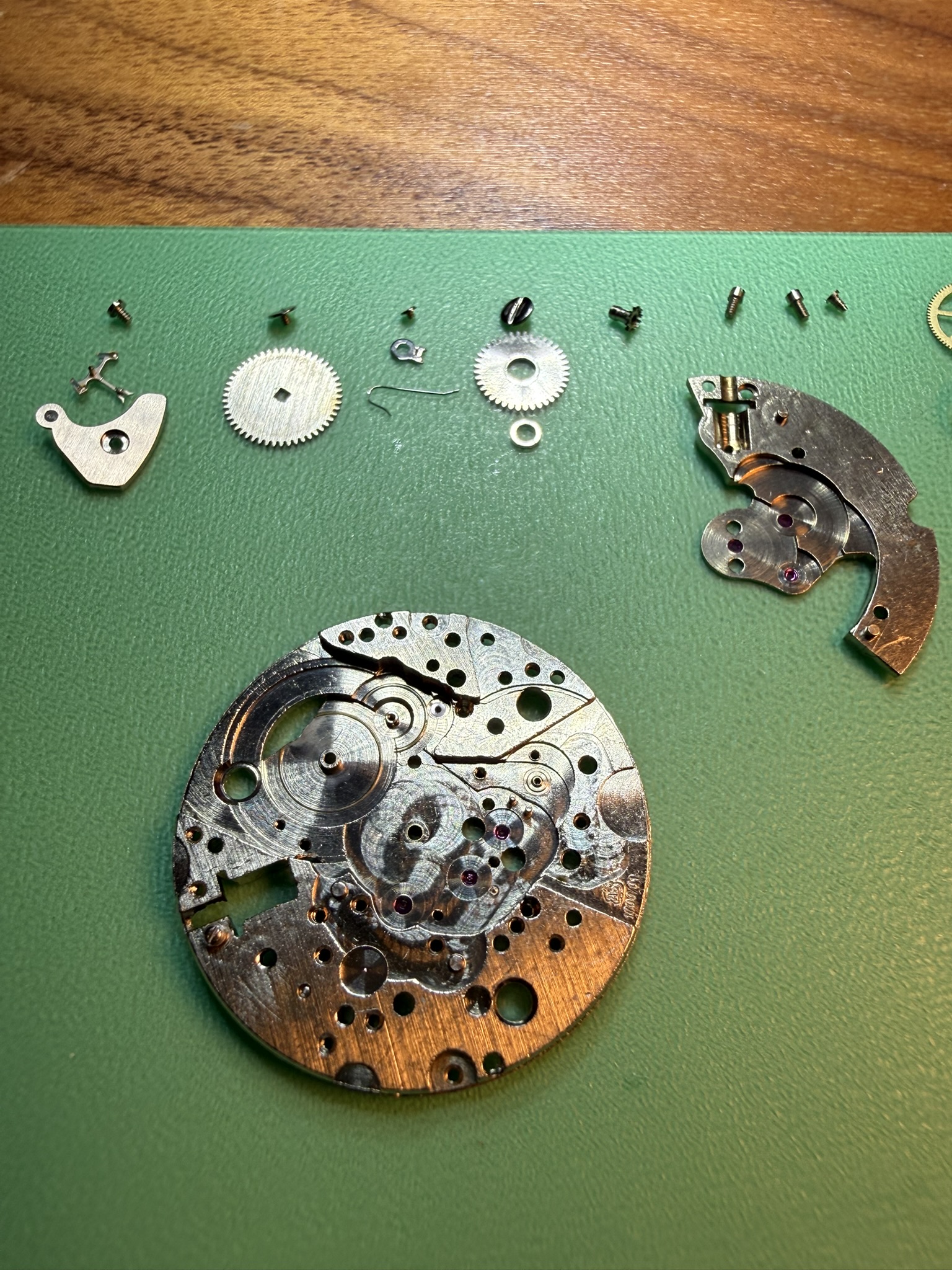
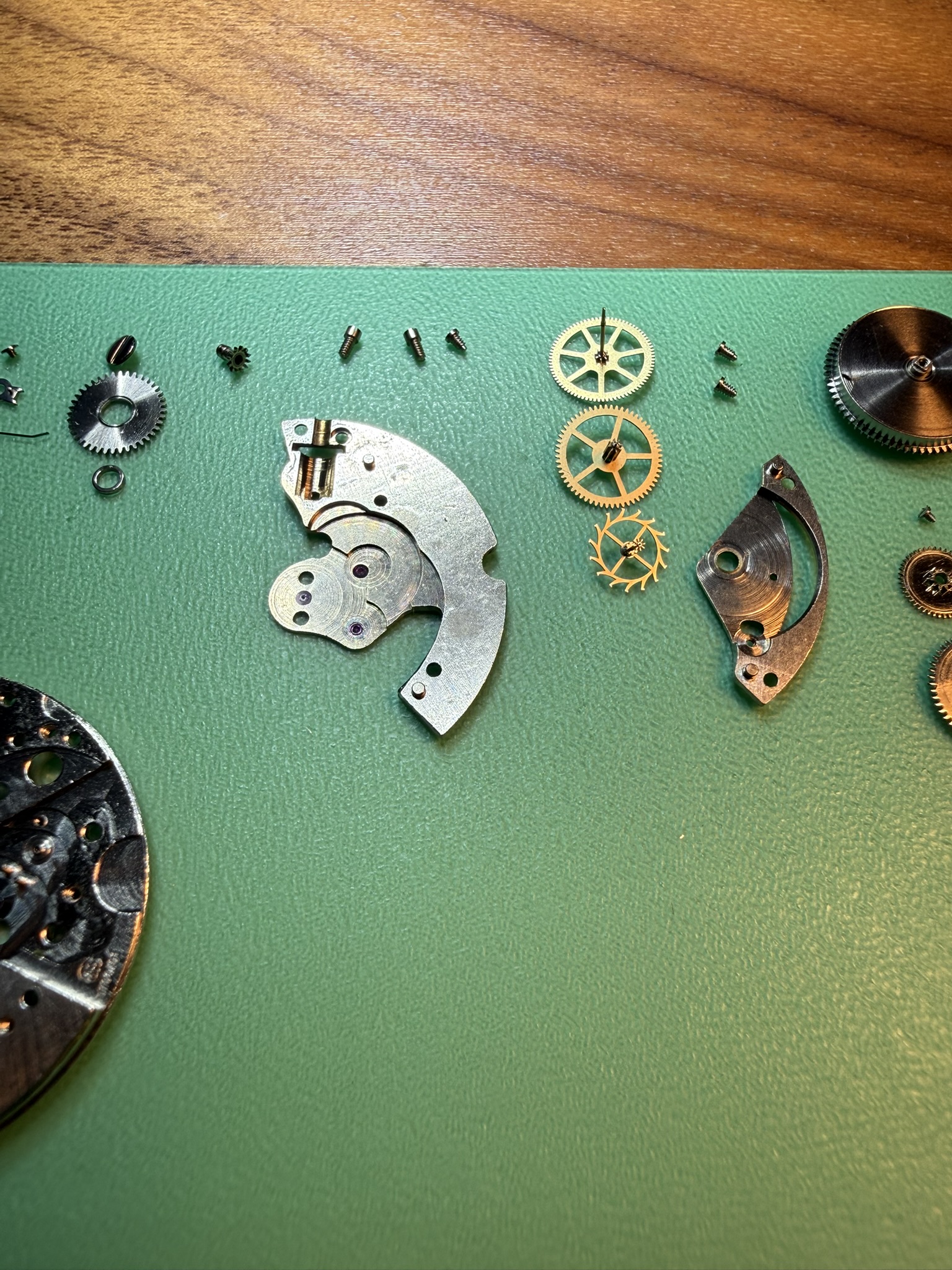
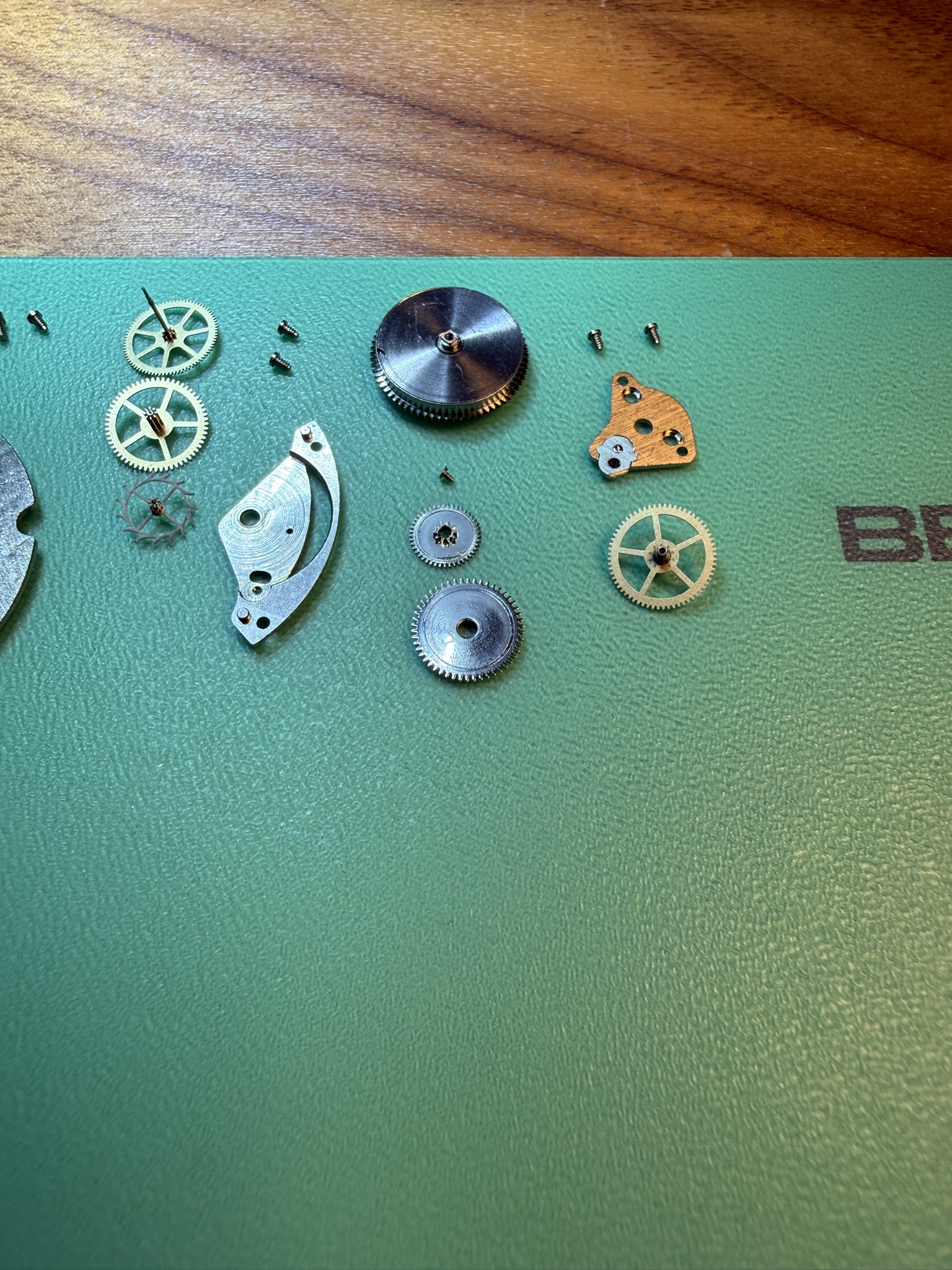
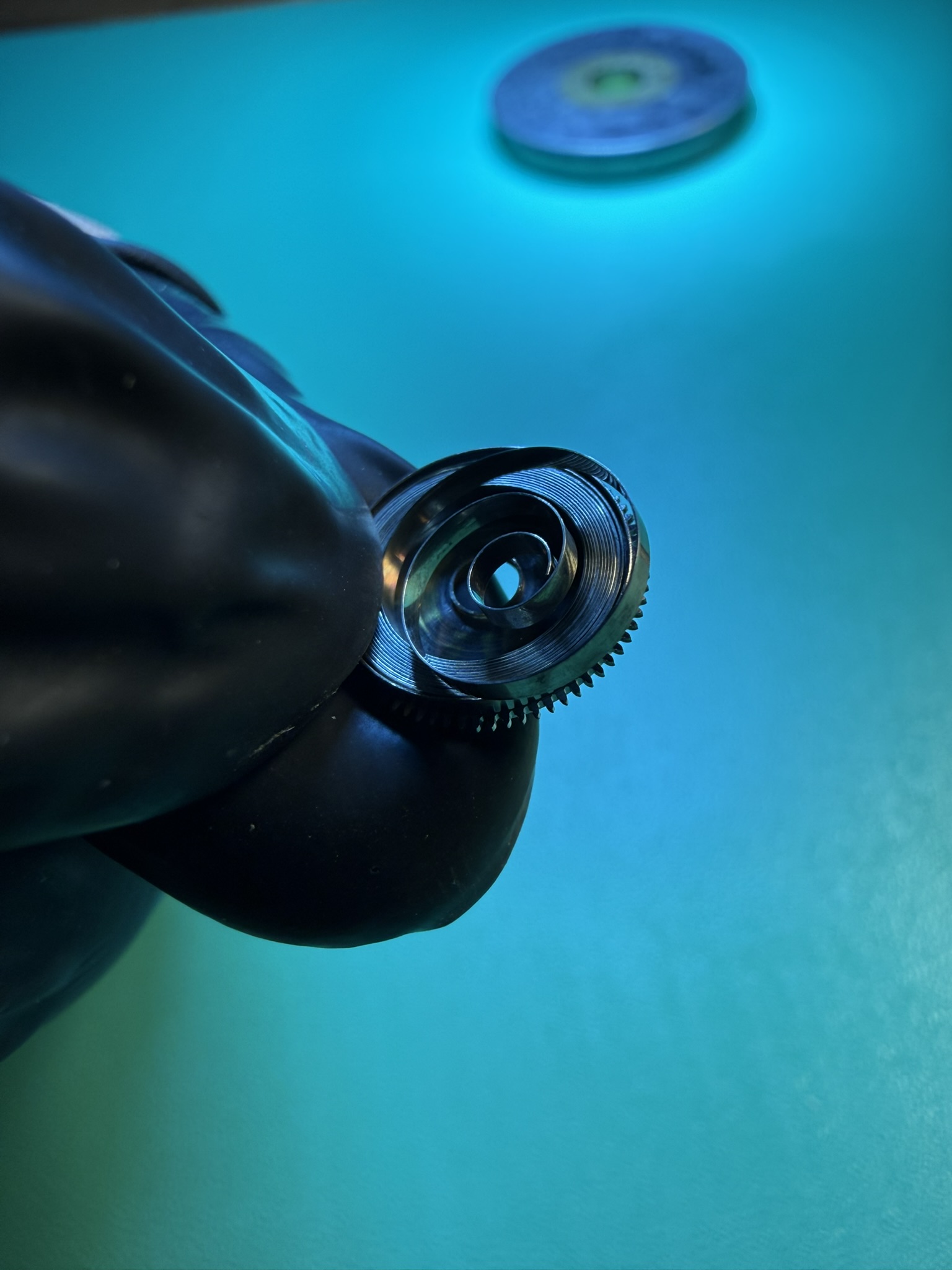
The mainspring has a slight bulge to it. Suspect it was inserted by hand. It's not enough that I'm worried, so I won't replace it.
Reassembly
The automatic winder in this one is different to anything I've ever
worked on before, so I made a couple mistakes when reassebling this one
and had to backtrack a couple times. The service manual and above photos
helped a lot though.
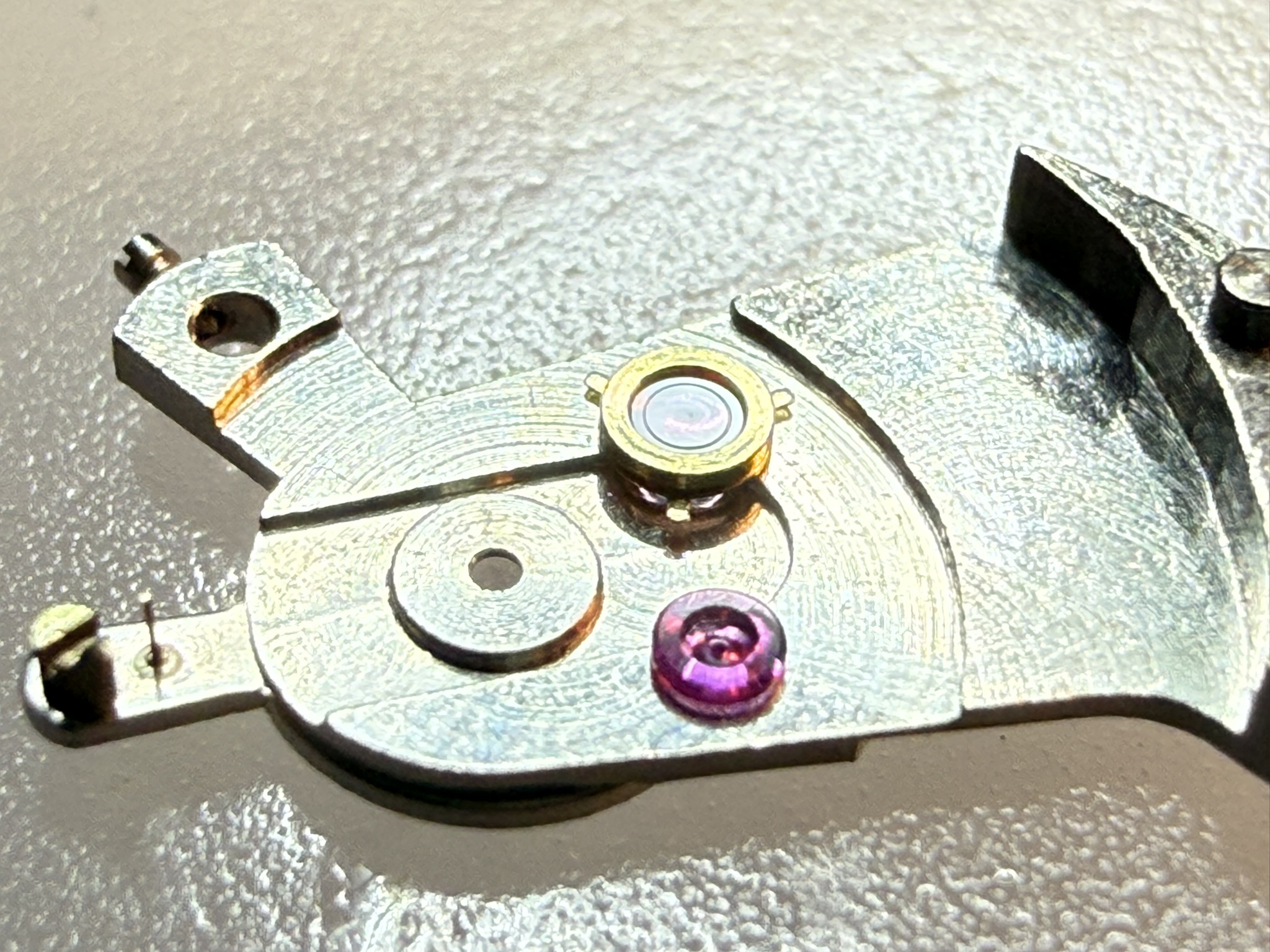
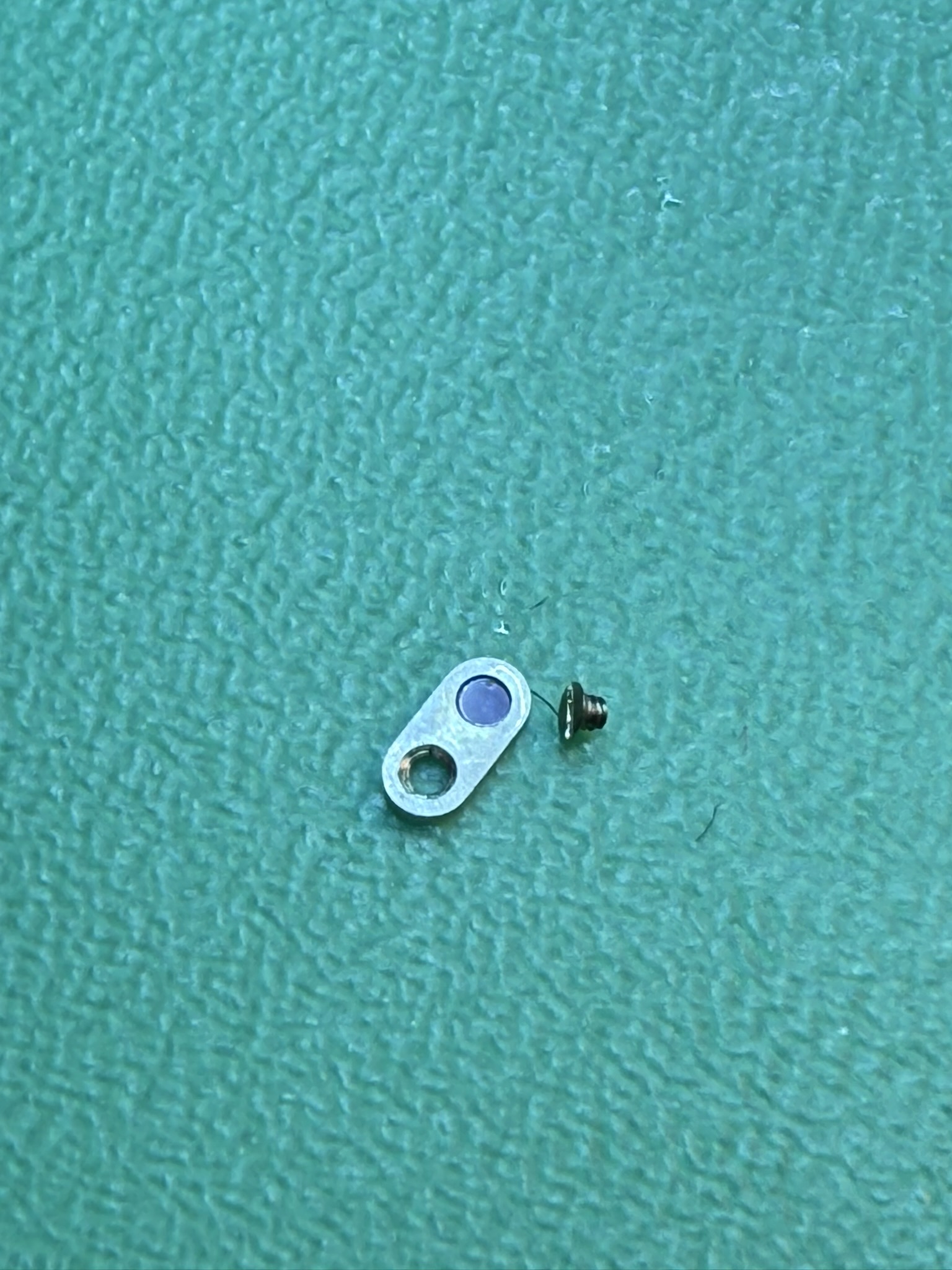
I really struggled to oil the balance shock protection system properly
because the chaton is fixed to the cap stone instead of the hole jewel.
I haven't worked on this type of system before... It's not feaible to
place a dot of oil on the end stone because it'll be displaced when
sliding the chaton into its slot. For non-shock-protected balances I
typically oil the hole jewel and wick the oil through to the cap stone
with a sharpened oiler, but on this movement the hole jewel is very
difficult to reach. The hole in the main plate is barely wider than the
spade end of Bergeon's red oiler for some context. I managed in the end.
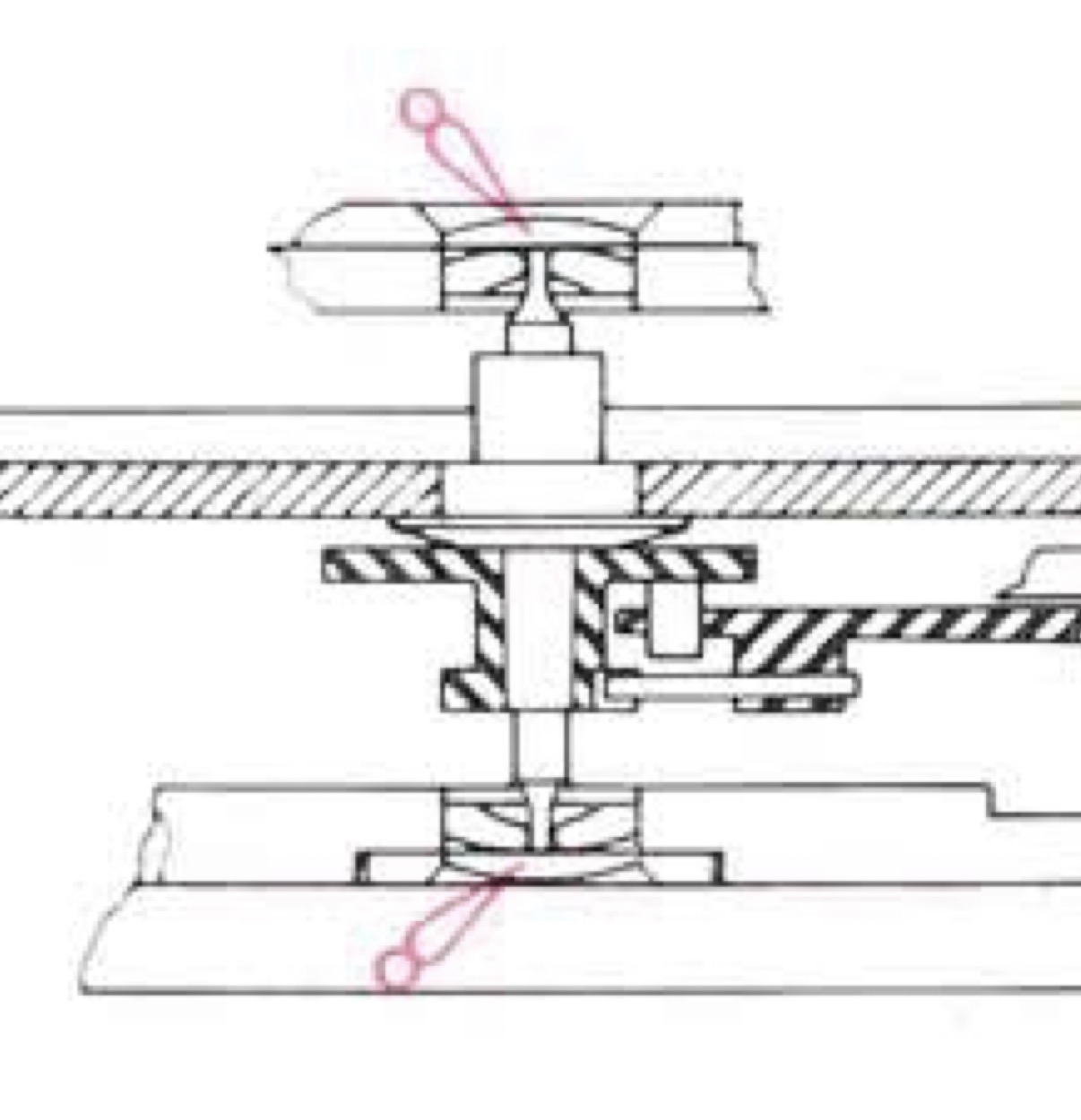
Here are photos of the shock protection system from the balance cock
along with a snippet from the service manual.